


Celotex
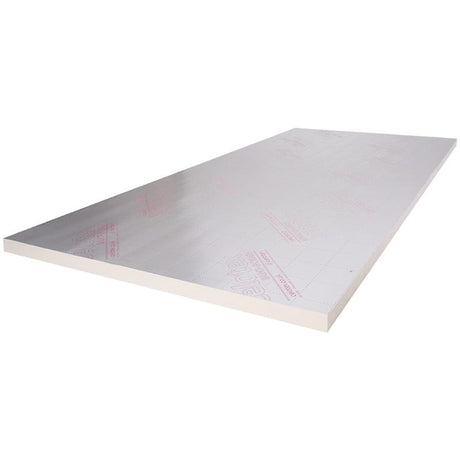
25mm Celotex TB4025 PIR Insulation Board 2.4m x 1.2m
£17.70 Inc VAT £14.75 Ex VATUnit price /UnavailableIn stock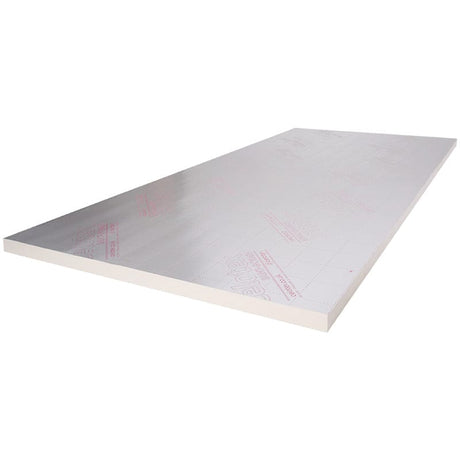
Celotex
20mm Celotex TB4020 PIR Insulation Board 2.4m x 1.2m
£20.22 Inc VAT £16.85 Ex VATUnit price /UnavailableIn stock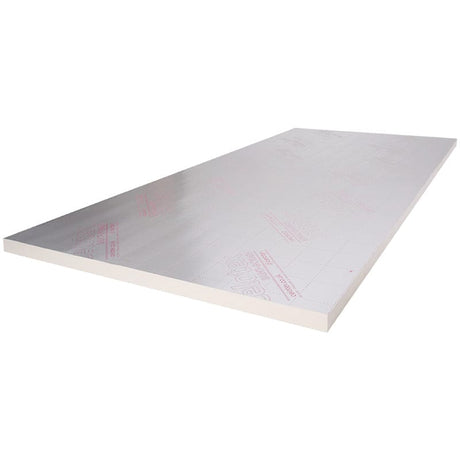
Celotex
30mm Celotex TB4030 PIR Insulation Board 2.4m x 1.2m
£20.84 Inc VAT £17.37 Ex VATUnit price /UnavailableIn stock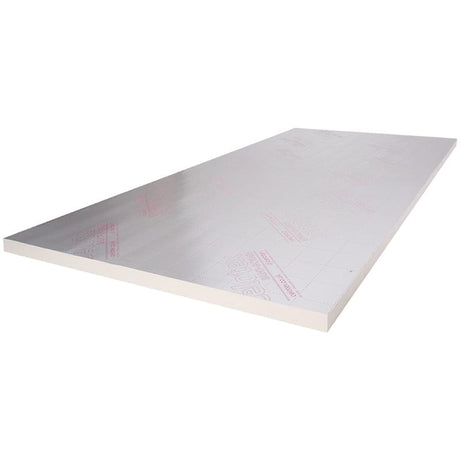
Celotex
40mm Celotex TB4040 PIR Insulation Board 2.4m x 1.2m
£25.00 Inc VAT £20.83 Ex VATUnit price /UnavailableIn stock-
 Shop Tekwarm Insulated Plasterboard
Our board. Same high standards.
Celotex
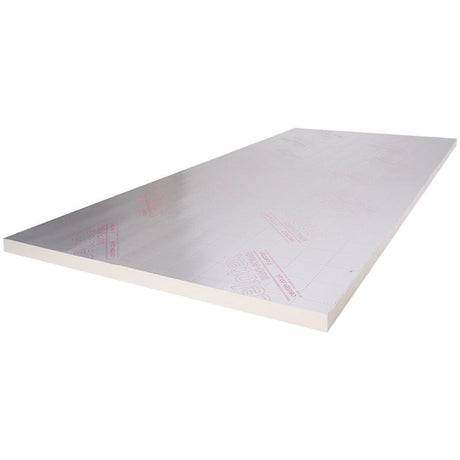
50mm Celotex GA4050 PIR Insulation Board 2.4m x 1.2m - 2.88m2 per sheet
£26.40 Inc VAT £22.00 Ex VATUnit price /UnavailableIn stock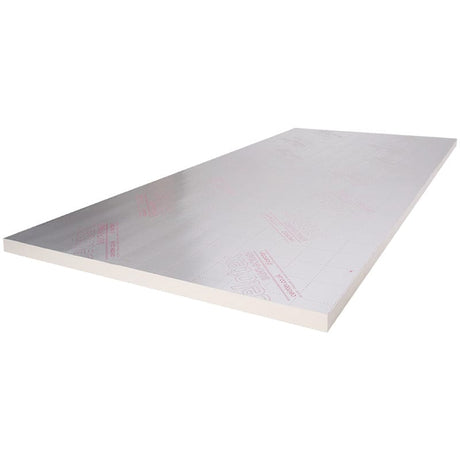
Celotex
60mm Celotex GA4060 PIR Insulation Board 2.4m x 1.2m - 2.88m2 per sheet
£33.43 Inc VAT £27.86 Ex VATUnit price /UnavailableIn stock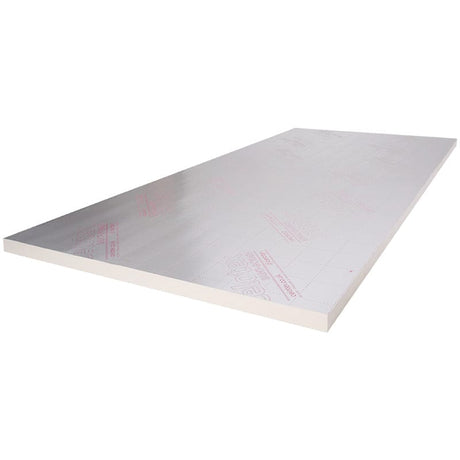
Celotex
75mm Celotex GA4075 PIR Insulation Board 2.4m x 1.2m - 2.88m2 per sheet
£35.39 Inc VAT £29.49 Ex VATUnit price /UnavailableIn stock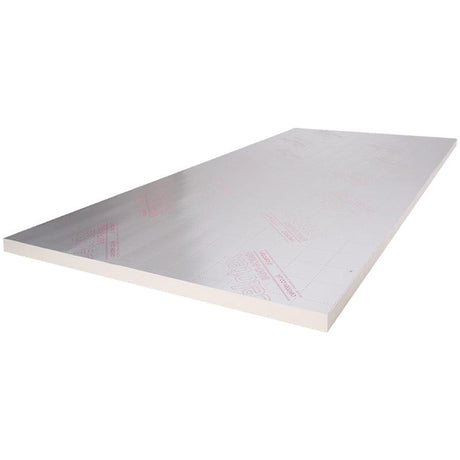
Celotex
70mm Celotex GA4070 PIR Insulation Board 2.4m x 1.2m - 2.88m2 per sheet
£37.20 Inc VAT £31.00 Ex VATUnit price /UnavailableIn stock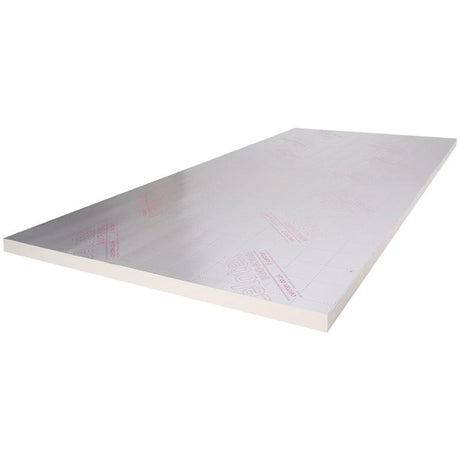
Celotex
80mm Celotex GA4080 PIR Insulation Board 2.4m x 1.2m - 2.88m2 per sheet
£40.91 Inc VAT £34.09 Ex VATUnit price /UnavailableIn stock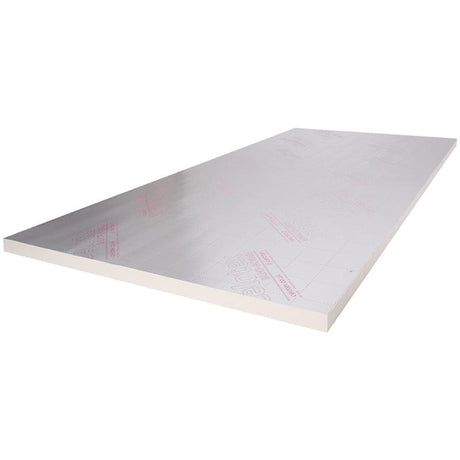
Celotex
90mm Celotex GA4090 PIR Insulation Board 2.4m x 1.2m - 2.88m2 per sheet
£44.83 Inc VAT £37.36 Ex VATUnit price /UnavailableIn stock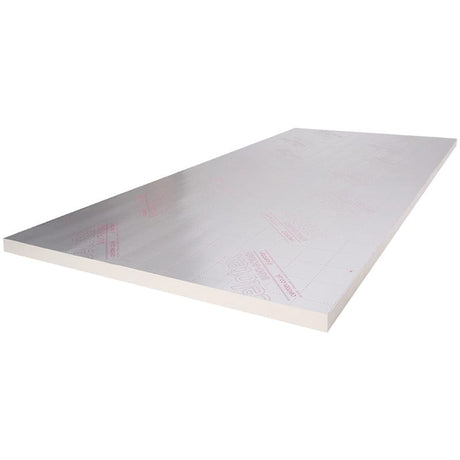
Celotex
100mm Celotex GA4100 PIR Insulation Board 2.4m x 1.2m - 2.88m2 per sheet
£45.29 Inc VAT £37.74 Ex VATUnit price /UnavailableIn stock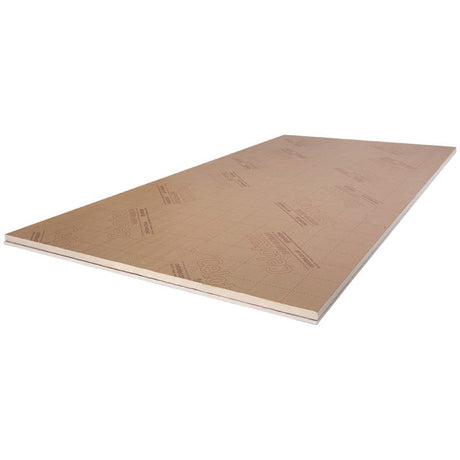
Celotex
37.5mm Celotex PL4025 PIR Insulated Plasterboard 2.4m x 1.2m - 2.88m2 per board
£47.48 Inc VAT £39.57 Ex VATUnit price /UnavailableIn stock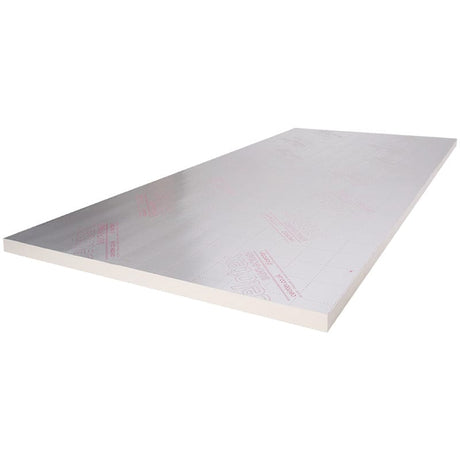
Celotex
120mm Celotex XR4120 PIR Insulation Board 2.4m x 1.2m - 2.88m2 per board
£54.95 Inc VAT £45.79 Ex VATUnit price /UnavailableIn stock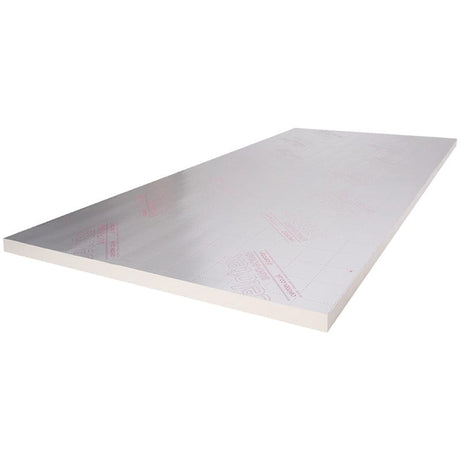
Celotex
110mm Celotex XR4110 PIR Insulation Board 2.4m x 1.2m - 2.88m2 per board
£56.08 Inc VAT £46.73 Ex VATUnit price /UnavailableIn stock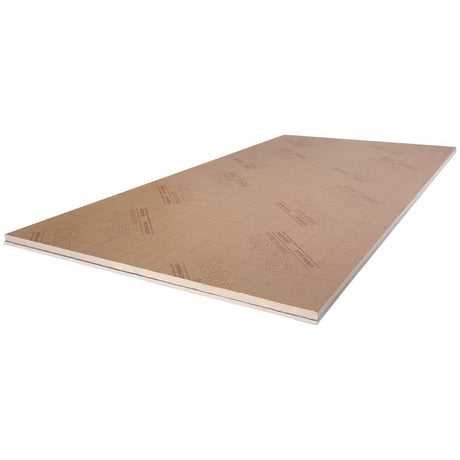
Celotex
52.5mm Celotex PL4040 PIR Insulated Plasterboard 2.4m x 1.2m - 2.88m2 per board
£58.90 Inc VAT £49.08 Ex VATUnit price /UnavailableIn stock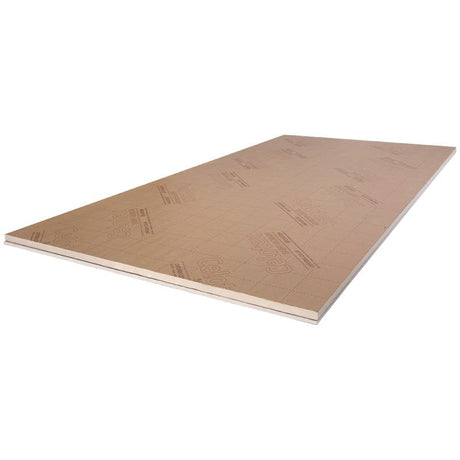
Celotex
62.5mm Celotex PL4050 PIR Insulated Plasterboard 2.4m x 1.2m - 2.88m2 per board
£64.33 Inc VAT £53.61 Ex VATUnit price /UnavailableIn stock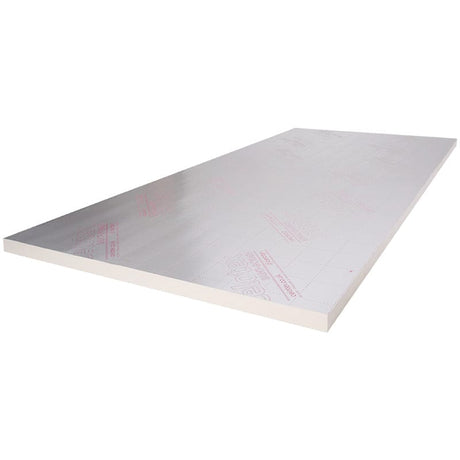
Celotex
130mm Celotex XR4130 PIR Insulation Board 2.4m x 1.2m - 2.88m2 per board
£66.95 Inc VAT £55.79 Ex VATUnit price /UnavailableIn stock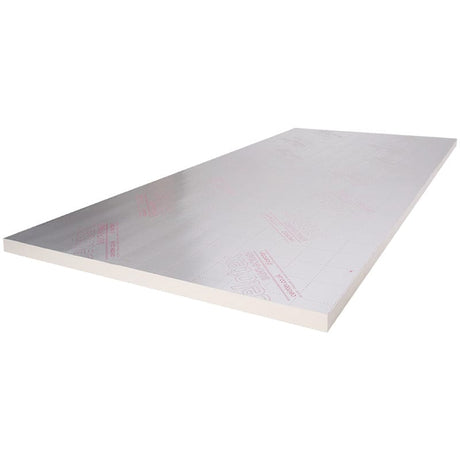
Celotex
150mm Celotex XR4150 PIR Insulation Board 2.4m x 1.2m - 2.88m2 per board
£67.50 Inc VAT £56.25 Ex VATUnit price /UnavailableIn stock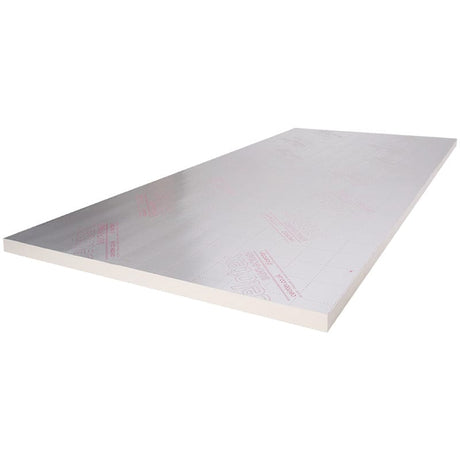
Celotex
140mm Celotex XR4140 PIR Insulation Board 2.4m x 1.2m - 2.88m2 per board
£68.52 Inc VAT £57.10 Ex VATUnit price /UnavailableIn stock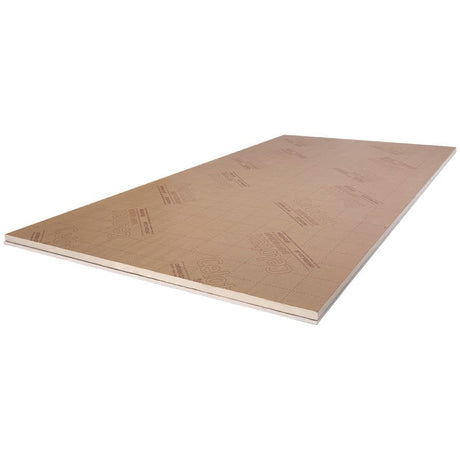
Celotex
72.5mm Celotex PL4060 PIR Insulated Plasterboard 2.4m x 1.2m - 2.88m2 per board
£75.02 Inc VAT £62.52 Ex VATUnit price /UnavailableIn stock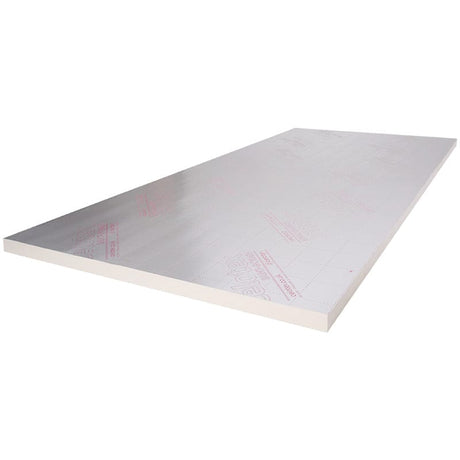
Celotex
200mm Celotex XR4200 PIR Insulation Board 2.4m x 1.2m - 2.88m2 per board
£169.20 Inc VAT £141.00 Ex VATUnit price /UnavailableIn stock


Celotex is now Sopratherm
Celotex is now Sopratherm. Same product codes, same UK manufacturing and the same declared thermal performance. Stock currently held is Celotex-branded and remains fully valid for use. If you are ordering against a drawing that specifies Celotex, or matching boards to an existing build-up, nothing changes technically.
What the Soprema rebrand means for your order.
What is Celotex insulation?
Celotex insulation is a rigid polyisocyanurate (PIR) board with low emissivity composite aluminium foil facings, manufactured in the UK and supplied in 2400mm x 1200mm sheets with a declared thermal conductivity of 0.022 W/mK. It is used in floors, walls, pitched roofs and loft conversions to meet Building Regulations U-value targets. The brand is now Sopratherm, owned by Soprema, with product codes and performance unchanged.
The range splits into two product types. Celotex PIR insulation boards are the rigid foil-faced boards, sold in the TB4000, GA4000 and XR4000 ranges. Celotex insulated plasterboard, the PL4000 range, bonds the same PIR core to a sheet of plasterboard so a solid wall can be insulated and finished in one operation.
That 0.022 W/mK figure is why a Celotex board reaches a given U-value at a fraction of the depth a fibre-based product would need. The boards carry zero ozone depletion potential and low global warming potential, are light enough to handle single-handed, and cut cleanly on site with a fine-toothed saw or insulation knife.
Celotex insulation boards at a glance
| Range | Thicknesses | Sheet size | Lambda | Primary use |
|---|---|---|---|---|
| TB4000 Thermal Break | 20mm to 40mm | 2400 x 1200mm | 0.022 W/mK | Thermal bridging, narrow spaces, multi-layer build-ups |
| GA4000 General Application | 50mm to 100mm | 2400 x 1200mm | 0.022 W/mK | Internal walls, floors, pitched roofs |
| XR4000 Extra Resistance | 110mm to 200mm | 2400 x 1200mm | 0.022 W/mK | Warm deck flat roofs, deep floor build-ups |
Celotex PIR insulation boards
The rigid boards account for most Celotex sold. All three ranges share the same PIR core, the same foil facings and the same 0.022 W/mK lambda: what separates them is thickness and the job each thickness suits. All are supplied in 2400mm x 1200mm sheets and need overboarding or covering once fixed, since the board itself is not a finished surface.
Celotex TB4000 thermal break boards, 20mm to 40mm
TB4000 is the thermal break board in the Celotex range, supplied in 20mm, 25mm, 30mm and 40mm. TB stands for thermal bridging: the reveals, lintels, junctions and structural elements where cold spots and heat loss concentrate. These are the boards for narrow spaces, thin overboarding and multi-layer build-ups where depth is at a premium.
Celotex GA4000 general application boards, 50mm to 100mm
GA4000 is the general application PIR board, running from 50mm to 100mm in 10mm steps. It is most commonly used as internal wall insulation, and is equally at home in floors and pitched roofs. GA4100, the 100mm board, is the best selling thickness in the range.
Celotex XR4000 extra resistance boards, 110mm to 200mm
XR4000 is the extra resistance board, covering 110mm, 120mm, 125mm, 140mm, 150mm and 200mm. These are the thicknesses for jobs where depth is available and the U-value target is demanding, most often warm deck flat roofs and deep floor build-ups.
Celotex insulated plasterboard
Celotex insulated plasterboard, sold as the PL4000 range, is a different product to the rigid boards above. A PIR board with a paper facing is laminated to 12.5mm tapered edge plasterboard, giving insulation and a plaster-ready surface in a single fix. It is the standard approach to dry lining a solid wall, and it saves the separate battening and boarding stage that a rigid board requires.
Total thickness is the 12.5mm of plasterboard plus the PIR, which runs from 25mm to 60mm. All four boards are supplied at 2.4m x 1.2m, covering 2.88m² per board:
| Product code | PIR thickness | Plasterboard | Total thickness |
|---|---|---|---|
| PL4025 | 25mm | 12.5mm | 37.5mm |
| PL4040 | 40mm | 12.5mm | 52.5mm |
| PL4050 | 50mm | 12.5mm | 62.5mm |
| PL4060 | 60mm | 12.5mm | 72.5mm |
The thinner boards suit rooms where floor area matters more than the last fraction of a U-value; the thicker ones where the target is demanding and you can afford to lose the depth. Fixing is by dot and dab adhesive or mechanical fixings depending on the substrate and the specification. Joints are taped and filled as with standard plasterboard, and the tapered edge takes a skim or a jointed finish. Where a vapour control layer is required by the design, it must be installed separately: the board facing does not perform that role.
Celotex insulation by application
Celotex floor insulation
Floors take more Celotex than any other application, and the right board depends on the floor type.
Solid ground floors: Boards are laid over the slab under a screed or floating deck, or below the slab where the design calls for it. The damp proof membrane position relative to the insulation is set by the drawing, so check it before you lay anything. 100mm and 150mm are the thicknesses most often specified, with GA4000 covering the shallower build-ups and XR4000 taking over where the target U-value is demanding.
Suspended timber floors: Boards are cut to friction-fit between joists, supported on battens or clips, and finished flush with the joist tops. Where the joist depth allows, a continuous layer laid over the joists closes the thermal bridge across the timbers, which a between-joist fit alone leaves open.
Block and beam floors: Boards sit over the beams and blocks below the screed, with thickness driven by the U-value target rather than the structure.
Floating floors: Under chipboard or engineered flooring, the board needs to be laid tight and level: gaps show up as movement underfoot. 25mm to 50mm is typical where the finished floor level is fixed and depth is short.
Whichever the floor type, the thickness is a function of the U-value target and the depth available under finished floor level, not a fixed rule. Browse all floor insulation.
Celotex wall insulation
There are two routes. Fix rigid Celotex PIR insulation boards to battens or a stud frame and overboard with plasterboard, or use Celotex insulated plasterboard and combine both operations in one fix. The first gives more control over the build-up and suits framed walls; the second is faster on a solid wall and loses less room depth. Celotex is also used within timber frame and steel frame walls. Reaction-to-fire requirements govern what can be used in the external walls of buildings above 11m in height, so check the specification before ordering PIR for that application.
For internal wall insulation, dry line a solid wall with Celotex PL4000 insulated plasterboard, or fix rigid GA4000 board to battens and overboard, bringing the wall up to a modern U-value while losing as little room depth as possible. For external wall applications, Celotex is used behind render and cladding systems as part of the specified build-up. Reaction-to-fire requirements govern what can be used in the external walls of buildings above 11m in height, so check the specification before ordering PIR for that application.
Celotex roof insulation
Used in pitched roofs between and under rafters, in warm deck flat roofs above the deck, and in cold deck build-ups. Rafter depth, ventilation strategy and the required U-value between them dictate the thickness. Where a full fill between rafters is not achievable, a thinner TB or GA board fixed under the rafters closes the bridge across the timbers. Browse all roof insulation.
Celotex loft insulation and loft conversions
Where a loft is being converted to living space rather than left cold, rigid PIR between and under the rafters brings the room inside the insulated envelope and preserves headroom in a way that a roll laid at joist level cannot. Boards can also be cut to fit tight between loft joists and finished flush, giving a firm, level base to lay loft boards over without crushing the insulation, which is what happens when boarding is laid straight onto a mineral wool roll.
Celotex thicknesses, sizes, R-values and U-values
Celotex boards are supplied in 2400mm x 1200mm sheets in a range of thicknesses.
Three thicknesses account for most orders: 50mm for stud walls and shallow floor build-ups, 100mm for standard floor and rafter work, and 150mm where the target U-value is demanding and depth is available.
Thermal resistance (the R-value) rises with thickness at a fixed lambda of 0.022 W/mK, and the declared figure for each board is listed on its product page. U-value is a different measure: it belongs to the whole construction rather than the board, so it depends on the substrate, cavity, fixings and finishes around the insulation. Two identical 100mm boards will give different U-values in different walls, which is why a single "100mm Celotex U-value" figure does not exist.
Celotex insulation prices
Prices vary by range and thickness: TB4000 boards are the lowest cost per sheet, GA4000 sits in the middle, and XR4000 and PL4000 carry the most material per board. Live pricing on every thickness is shown on the product pages above, with volume rates available on larger quantities and free delivery on orders over £500 ex VAT. Every board supplied is new, full-size and unblemished: Insulation UK does not sell seconds, offcuts or damaged stock, so what arrives on site is what you specified.
Why choose Insulation UK for Celotex insulation
- Full range stocked: Celotex PIR insulation boards in TB4000, GA4000 and XR4000, plus PL4000 insulated plasterboard, held in depth so mixed-thickness orders ship together.
- Trade pricing: Direct pricing on every thickness, with volume rates on larger quantities.
- Fast UK-wide delivery: Dispatched from Rotherham, with free delivery on orders over £500 ex VAT.
- Fifty years of industry experience: Advice from people who understand what goes into a build-up, not just what sits on the shelf.
Celotex insulation: common questions
Common questions about Celotex insulation
Is Celotex a good insulation?
Yes, for thermal performance per millimetre of depth. At 0.022 W/mK Celotex sits at the high-performing end of the PIR bracket, which makes it the standard choice on jobs constrained by depth: a shallow floor void, a fixed rafter depth, a room where every millimetre of internal space matters. It is less suited to anything requiring acoustic performance or high-temperature resistance, and it is not a drop-in substitute for mineral wool at joist level in a cold loft, where a roll is usually the more economical option.
What thickness of Celotex do I need for a floor, wall or roof?
It depends on the U-value target and the depth available, not the application alone. As a rough guide, 50mm suits stud walls and shallow floor build-ups, 100mm covers standard floor and rafter work, and 150mm is used where the target U-value is demanding and depth is available. See the application sections above for how the board is used in each case, and check the drawing before ordering.
Does Celotex need an air gap?
It depends on the build-up, not the board. In a ventilated pitched roof, a clear ventilation gap is normally required above the insulation between the rafters, which is why the board is often cut narrower than the rafter depth. In warm deck flat roofs and solid floor build-ups, no air gap is designed in. In cavity walls, the residual cavity is set by the design. Check the drawing and current manufacturer guidance before you cut.
What is the difference between Celotex PIR insulation boards and Celotex insulated plasterboard?
Celotex PIR insulation boards are foil-faced boards that need overboarding with plasterboard once fixed. Celotex insulated plasterboard is the same PIR core bonded to 12.5mm tapered edge plasterboard, so it insulates and gives a plaster-ready face in one operation. Rigid boards give more control over the build-up and suit framed walls, floors and roofs; insulated plasterboard is quicker on a solid wall and loses less room depth.
Do the foil facings act as a vapour control layer?
No. The low emissivity foil facings work as a reflective surface at the boundary of the construction, but they are not a vapour control layer and should not be treated as a substitute for one. Where the design calls for a VCL, install one as specified.
Is Celotex the same as Sopratherm?
Yes. Celotex is now sold as Sopratherm, owned by Soprema. The product codes (TB4000, GA4000, XR4000, PL4000), the UK manufacturing and the declared thermal performance are all unchanged, and Celotex-branded stock remains fully valid for use. If a drawing specifies Celotex, a Sopratherm board of the same code is a like-for-like match.
What happened to Celotex?
Celotex is now part of Soprema and the product line has been rebranded to Sopratherm. Product codes (TB4000, GA4000, XR4000, PL4000), UK manufacturing and declared thermal performance are all unchanged, and Celotex-branded stock remains fully valid for use. See the rebrand explainer for what it means for an order placed now.
How does Celotex compare with other PIR boards?
Most UK PIR boards from the major manufacturers share the same declared thermal conductivity of 0.022 W/mK, so at equal thickness the thermal performance is broadly comparable. The decision usually comes down to what the specification names, which thicknesses are in stock, and the certification each board holds for the application in question. If a drawing specifies a competing board and you want to know whether a Celotex thickness is a like-for-like swap, call the team before ordering.