
Celotex
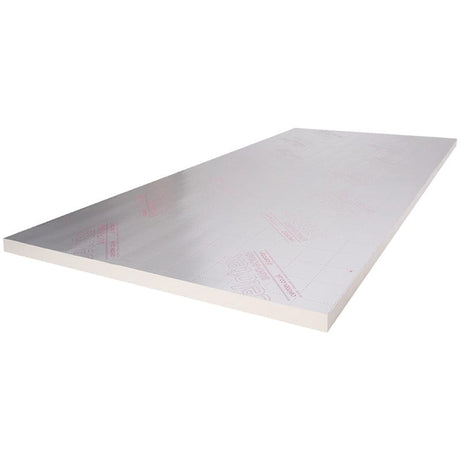
110mm Celotex XR4110 PIR Insulation Board 2.4m x 1.2m - 2.88m2 per board
£56.08 Inc VAT £46.73 Ex VATUnit price /UnavailableIn stock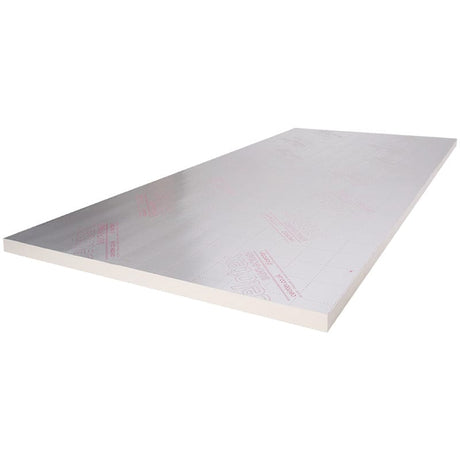
Celotex
120mm Celotex XR4120 PIR Insulation Board 2.4m x 1.2m - 2.88m2 per board
£54.95 Inc VAT £45.79 Ex VATUnit price /UnavailableIn stock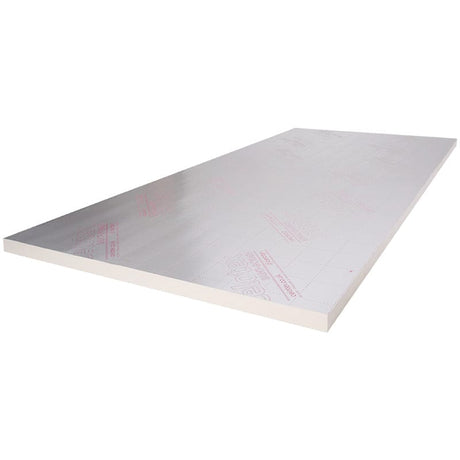
Celotex
130mm Celotex XR4130 PIR Insulation Board 2.4m x 1.2m - 2.88m2 per board
£66.95 Inc VAT £55.79 Ex VATUnit price /UnavailableIn stock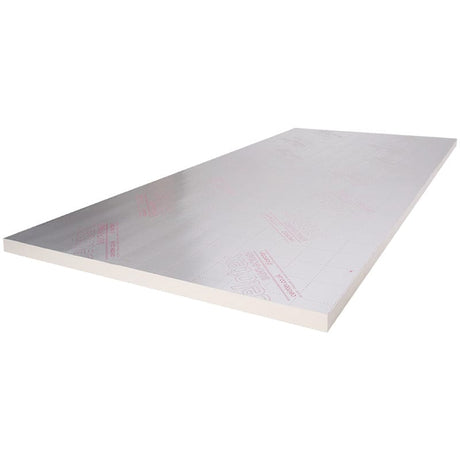
Celotex
140mm Celotex XR4140 PIR Insulation Board 2.4m x 1.2m - 2.88m2 per board
£68.52 Inc VAT £57.10 Ex VATUnit price /UnavailableIn stock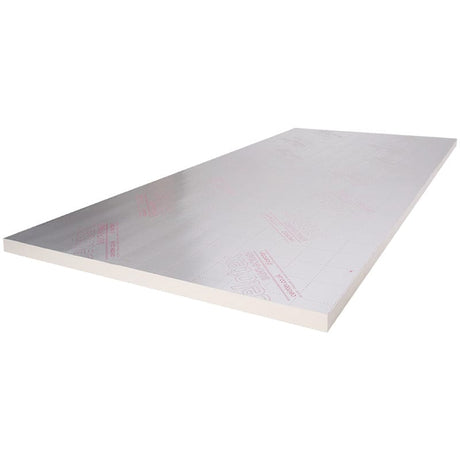
Celotex
150mm Celotex XR4150 PIR Insulation Board 2.4m x 1.2m - 2.88m2 per board
£67.50 Inc VAT £56.25 Ex VATUnit price /UnavailableIn stock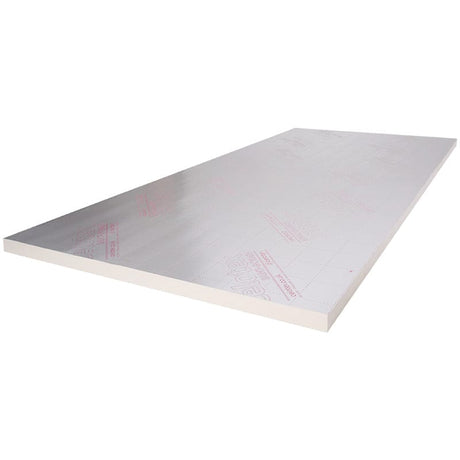
Celotex
200mm Celotex XR4200 PIR Insulation Board 2.4m x 1.2m - 2.88m2 per board
£169.20 Inc VAT £141.00 Ex VATUnit price /UnavailableIn stock


One Layer or Two
Every PIR board in the Celotex family shares the same core and the same 0.022 W/mK. So on paper, two 75mm boards give you more thermal resistance than one 140mm. If resistance were the only thing that mattered, nobody would buy XR4000.
What XR4000 buys is the single layer. And the difference between one layer and two is not thermal, it is everything else:
- Labour. Two passes of cutting, fitting and fixing instead of one, across the whole area.
- Joints. A second layer means a second set of joints to close and tape. Staggering them helps, but it is more work, not less.
- Bridging risk. Every joint that does not close properly is a small thermal bridge. Doubling the joints doubles the opportunities to get one wrong.
- Depth control. Two boards plus whatever sits between them is harder to keep flush than one board cut to the structural depth.
- Delivery and handling. Two product lines, two sets of offcuts, two lots of material on a site with nowhere to put it.
That is the trade. Where a rafter or joist depth can take a single 140mm or 150mm board, taking it is usually the cheaper and cleaner answer even where the board itself costs more per square metre than two thinner ones would.
Celotex XR4000 is a rigid polyisocyanurate (PIR) insulation board with low-emissivity aluminium foil on both faces, made in the thickest depths of the Celotex family at 2400mm x 1200mm. Declared thermal conductivity is 0.022 W/mK, compressive strength is 140 kPa, and the range holds BBA Certificate 25/7318 for pitched roof, dry lining and floor insulation.
The Range, and What Each Depth Is Reaching For
We stock six XR4000 boards, from 110mm to 200mm. The R-values are internally consistent throughout: every figure is the thickness divided by 0.022, rounded down to the nearest 0.05, which is the method set out in BS EN 13165.
| Product code | Thickness | Thermal resistance (RD) | Coverage per board |
|---|---|---|---|
| XR4110 | 110mm | 5.00 m²K/W | 2.88m² |
| XR4120 | 120mm | 5.45 m²K/W | 2.88m² |
| XR4130 | 130mm | 5.90 m²K/W | 2.88m² |
| XR4140 | 140mm | 6.35 m²K/W | 2.88m² |
| XR4150 | 150mm | 6.80 m²K/W | 2.88m² |
| XR4200 | 200mm | 9.05 m²K/W | 2.88m² |
110mm to 130mm covers standard rafter and joist depths where a single board fits between the structure with a ventilation gap left above it. This is where most of the volume sits.
140mm and 150mm are the depths that let a conventional pitched roof or floor build-up reach a demanding target without a second layer. 150mm is the most searched thickness in the range by a distance.
200mm is the specification-driven end: retrofit work to tight targets, deep rafters, and floor build-ups where the depth is available and the target is low.
110mm is where the range starts. XR4000 is searched for at 100mm reasonably often, but there is no XR4100. At 100mm the board is GA4100 from the General Application range, which uses the same core, the same facings and the same declared conductivity, giving 4.50 m²K/W.
Soprema also manufactures XR4000 at 125mm and 165mm. We do not hold either, so call us on 0300 303 4578 if a specification names one and we will look at what can be sourced or what the nearest stocked depth does to the calculation.
How Heavy Is Celotex XR4000?
Every competitor page describes XR4000 as lightweight and easy to handle. That language has been inherited from the thin end of the Celotex family and it stops being true somewhere around 140mm.
These are the maximum weights published on the Celotex XR4000 datasheet:
| Thickness | Maximum weight | Approximate weight per board |
|---|---|---|
| 110mm | 4.54 kg/m² | 13.1 kg |
| 120mm | 4.93 kg/m² | 14.2 kg |
| 130mm | 5.32 kg/m² | 15.3 kg |
| 140mm | 5.71 kg/m² | 16.4 kg |
| 150mm | 6.10 kg/m² | 17.6 kg |
| 200mm | 8.06 kg/m² | 23.2 kg |
The series works out at a little over 39 kg/m³, which is the maximum density it implies for the board including facings. The per-board figures are calculated from the datasheet maxima at 2.88m² a board rather than published directly, and a separate published weight series runs roughly 20% lower, so treat both columns as an upper bound rather than a specification.
The point holds either way. A 200mm XR4000 board is 2.4 metres long, 1.2 metres wide and comfortably over 20kg. It is a two-person lift, it does not go up a domestic staircase easily, and on a loft conversion that is worth thinking about before the delivery arrives rather than after. Plan the route in, or plan to cut boards down at ground level.
Where Is Celotex XR4000 Used?
Certificate 25/7318 covers three application groups. In practice, XR4000 turns up in:
- Pitched roofs, cut to fit between rafters, with a ventilation gap maintained above the board where the construction requires one.
- Sloping ceilings and room-in-roof, where the rafter depth is the whole budget and a single board has to do the work.
- Ground floors: solid concrete slab, block and beam, and suspended timber joists.
- Upgrading an existing slab, where a new insulation layer goes over the top.
- Timber and steel framed walls, between the studs.
- Retrofit lining to existing timber and masonry structures.
Timber frame external walls in dwellings are covered separately under Certificate 25/7329.
Three boundaries worth being clear about.
Flat roofs are not in the certificate. Certificate 25/7318 covers pitched roof, dry lining and floor insulation, and that is the whole of it. XR-depth PIR does get installed between joists in ventilated cold roof build-ups from inside the building, but that sits outside the certificate scope and is a decision for the specifier and building control, not something the certificate supports. For a warm deck flat roof, the board needs to be one certified for the deck construction and compatible with the waterproofing system going over it, which XR4000 is not.
Not a cavity board. Some listings put XR4000 in cavity walls. It is not a cavity product: CW4000 and Thermaclass Cavity Wall 21 are the Soprema boards for that job, and we do not hold either. What we do stock for cavities sits in the cavity wall insulation range.
Height. Soprema states that, in accordance with current Building Regulations requirements relating to combustibility, the product should not be used in the external walls of relevant buildings over 11 metres in height. Where a project sits above that, or where the specification calls for a non-combustible or limited-combustibility product, mineral wool is the route.
What "Single Layer" Does and Does Not Promise
XR4000 makes single-layer solutions possible at depths where they previously were not. It does not guarantee a number.
A U-value belongs to the completed construction, and it depends on the rafter or joist depth, the bridging fraction from the timber or steel, whether the build-up contains a sealed cavity, and everything else in the element. "Achieves 0.15 W/m²K" is a statement about a build-up, not about a board, and any page that attaches such a figure to XR4000 without publishing the full construction is overstating it.
What the board contributes is the declared thermal resistance in the table above. Soprema publishes a U-value calculator for working the rest out against a real detail.
The same care applies to the foil facings. Low-emissivity aluminium improves thermal performance across a sealed, unventilated cavity air space next to the board. In a ventilated cold roof, that condition may not be met, in which case the benefit does not apply and the declared resistance is what counts.
Celotex XR4000 Specification
| Material | Rigid polyisocyanurate (PIR) |
|---|---|
| Board size | 2400mm x 1200mm, 2.88m² per board |
| Thicknesses stocked | 110, 120, 130, 140, 150 and 200mm |
| Declared thermal conductivity (λD) | 0.022 W/mK |
| Facings | Low-emissivity aluminium foil, both faces |
| Surface emissivity | 0.05 |
| Edge profile | Straight |
| Compressive strength | 140 kPa at 10% deformation to BS EN 826 |
| Reaction to fire | Euroclass F to BS EN 13501-1 |
| Product standard | BS EN 13165 |
Certification. BBA Agrément Certificate 25/7318 covers pitched roof, dry lining and floor insulation, published as three separate certificate documents. Certificate 25/7329 covers timber-frame dwellings. An Environmental Product Declaration covering XR4000 alongside TB4000, GA4000 and CW4000 is issued through the International EPD System, last reissued in November 2025. Certificates 17/5405 and 16/5352 still appear on retailer listings and have both been superseded.
Fire. Euroclass F to BS EN 13501-1, with no smoke emission rating at that classification. This predates the rebrand; the September 2023 Celotex datasheet already declared F. The classification means the board is designed to be installed behind a lining or covering rather than left exposed. Reaction to fire is not fire resistance, and describes the board under test rather than how long a construction will hold back a fire.
The rebrand. Soprema UK unified Celotex, Chesterfelt and YBS Insulation on 1 January 2026, and the range is now catalogued as Sopratherm XR4000. Codes, dimensions, performance and certification are unchanged; only the packaging branding differs. The certificate holder is now Soprema Insulation Limited t/a Celotex, which matters if documents are going to building control.
A note on 18 metres. Some listings quote an 18m figure alongside XR4000. That number relates to the height envelope assessed for the timber frame application under Certificate 25/7329, which covers walls of conventional timber-frame dwellings up to 18m. It is a different thing from Soprema's combustibility restriction at 11m and should not be read as overriding it. Anyone working near either threshold should open the certificate rather than work from a retailer summary.
Buying at the Thick End
Thicknesses up to 150mm are generally available as single boards. At 200mm, availability in small quantities varies between merchants, and some will not break a delivery down to single boards at all. Worth knowing before planning a small order.
If the quantity you need falls awkwardly, it is worth a phone call before ordering. It is also worth asking whether a thinner board at a greater quantity works out better for the specific build-up, since the answer at 200mm is sometimes yes.
Why Choose Insulation UK
- Six XR4000 thicknesses in stock, from 110mm through to 200mm.
- Delivery that accounts for the product. Boards at this end of the range are heavy and long. Tell us the access situation when you order and we will plan around it, on our FORS Gold accredited fleet.
- Bespoke cutting service. Useful at these depths, since a 200mm board that has to go up a domestic staircase is easier cut at ground level. See our bespoke cutting service.
- Trade pricing on single boards and full project quantities.
- Free UK delivery on orders over £500 ex VAT.
- Talk it through first. Rated Excellent on Trustpilot, and happy to work through whether one layer or two is the better answer for your build-up. Call 0300 303 4578.
Celotex XR4000 FAQs
What is Celotex XR4000?
A rigid polyisocyanurate (PIR) insulation board made in the thickest depths of the Celotex family, at 2400mm x 1200mm. XR stands for extra resistance, and the range exists to let a build-up reach a low U-value in a single layer rather than two. Declared thermal conductivity is 0.022 W/mK, with low-emissivity aluminium foil on both faces and BBA Certificate 25/7318. We stock six thicknesses from 110mm to 200mm.
What is the conductivity of Celotex XR4000?
0.022 W/mK declared, the same figure across the whole Celotex 4000 PIR family. Thermal resistance runs from 5.00 m²K/W at 110mm to 9.05 m²K/W at 200mm.
What is the difference between Celotex GA4000 and XR4000?
Depth and purpose. GA4000 runs 50mm to 100mm and covers standard build-ups. XR4000 runs from 110mm upwards and exists for build-ups that need to hit a demanding target in one layer. Core, facings, declared conductivity and compressive strength (140 kPa) are identical across both. XR4000 is not a higher-performing material, it is the same material in greater depth.
Is XR4000 available in 100mm?
No. The range starts at 110mm. At 100mm the equivalent board is GA4100 from the General Application range, with the same core, facings and 0.022 W/mK conductivity, giving 4.50 m²K/W.
Do you stock XR4000 in 125mm or 165mm?
Not as standard. Soprema manufactures both, but we hold 110mm, 120mm, 130mm, 140mm, 150mm and 200mm. If a specification names 125mm or 165mm, call us and we will look at what can be sourced or what the nearest stocked depth does to the calculation.
How heavy is a 200mm XR4000 board?
Working from the maximum weight of 8.06 kg/m² published on the Celotex datasheet, a 2400mm x 1200mm board comes out around 23kg. It is a two-person lift and needs planning for on a job with restricted access. Published weight figures vary between sources, so treat that as an upper bound.
What is the density of Celotex XR4000?
Soprema does not publish a density figure directly. The maximum weights on the datasheet work out at a little over 39 kg/m³ including facings, which is the upper bound the published figures imply. A separate published weight series runs around 20% lower.
Can Celotex XR4000 be used on a flat roof?
Not under Certificate 25/7318, which covers pitched roof, dry lining and floor insulation only. XR-depth PIR is used between joists in ventilated cold roof build-ups from inside the building, but that is outside the certificate scope and needs to be confirmed against the design. For a warm deck flat roof, the board has to be one certified for the deck construction and compatible with the waterproofing above it.
Is there an equivalent to Celotex XR4000?
On specification, other foil-faced PIR at 0.022 W/mK gives the same thermal resistance at the same thickness, so any PIR board at that declared lambda is a like-for-like swap on the numbers. The one thing that changes the answer at this end of the range is material: phenolic boards declare around 0.019 W/mK, so they reach a given resistance in less depth. Where depth is the binding constraint, which is usually why someone is looking at XR4000 in the first place, that is worth pricing. Where a specification names a brand, check whether it permits an equivalent before substituting.
What is the fire rating of Celotex XR4000?
Euroclass F to BS EN 13501-1, with no smoke emission rating at that classification. Listings quoting Euroclass E or a BS 476 class are out of date.
Where can I find the Celotex XR4000 data sheet?
Soprema publishes the current technical data sheet, Declaration of Performance and BBA certificate under the Sopratherm XR4000 listing. Work from the current issue rather than an archived Celotex sheet, since both the certificate number and the certificate holder have changed.