
Celotex
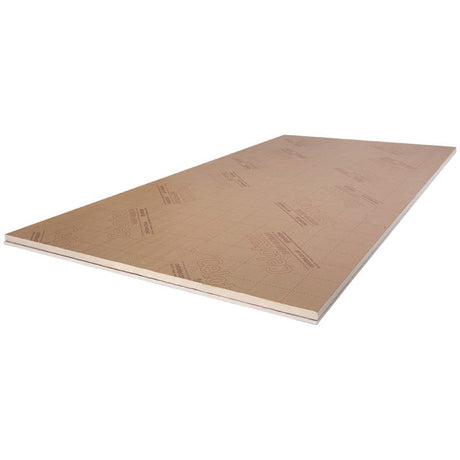
37.5mm Celotex PL4025 PIR Insulated Plasterboard 2.4m x 1.2m - 2.88m2 per board
£47.48 Inc VAT £39.57 Ex VATUnit price /UnavailableIn stock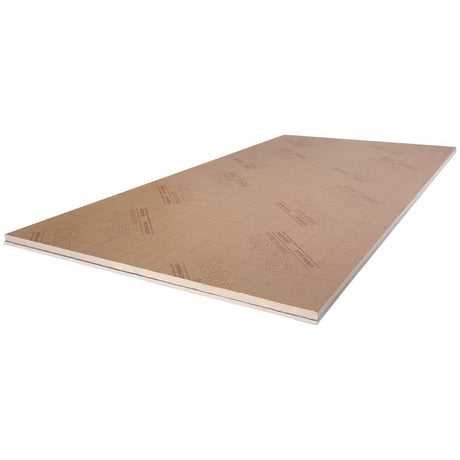
Celotex
52.5mm Celotex PL4040 PIR Insulated Plasterboard 2.4m x 1.2m - 2.88m2 per board
£58.90 Inc VAT £49.08 Ex VATUnit price /UnavailableIn stock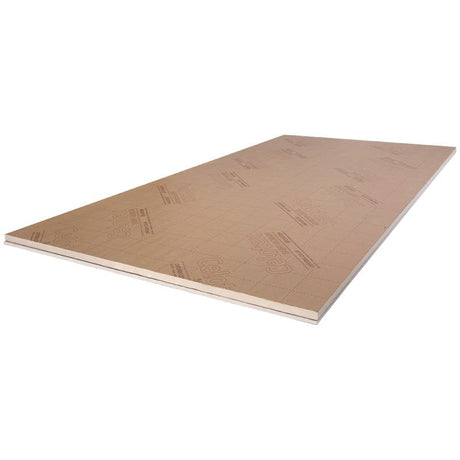
Celotex
62.5mm Celotex PL4050 PIR Insulated Plasterboard 2.4m x 1.2m - 2.88m2 per board
£64.33 Inc VAT £53.61 Ex VATUnit price /UnavailableIn stock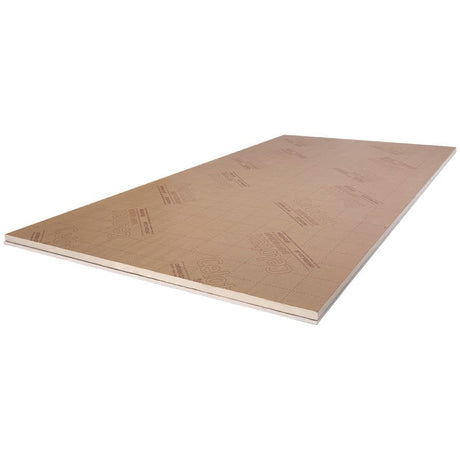
Celotex
72.5mm Celotex PL4060 PIR Insulated Plasterboard 2.4m x 1.2m - 2.88m2 per board
£75.02 Inc VAT £62.52 Ex VATUnit price /UnavailableIn stock


Two Jobs, One Board. Celotex PL4000
A thermal laminate is a PIR insulation board with plasterboard already bonded to one face. You fix it once and you have both the insulation layer and the lining, ready for jointing and skimming.
On a solid wall being lined internally, the alternative is a separate PIR board, then battens or a frame, then a separate sheet of plasterboard. PL4000 collapses that into one fixing operation. The saving is time and depth rather than thermal performance, which is the honest way to put it.
To be clear on one point that comes up constantly: the plasterboard is on one face only. The other face is kraft paper, and that is the side that goes against the wall.
Celotex PL4000 is a thermal laminate built on a 2400mm x 1200mm board covering 2.88m². We stock four sizes, from a 25mm PIR core at 37.5mm overall up to a 60mm core at 72.5mm overall. The PIR core has a declared thermal conductivity of 0.022 W/mK, the laminate achieves Euroclass B-s1,d0, and the range holds BBA Certificate 25/7366 for internal wall dry lining and pitched roof ceiling applications.
The Thickness Confusion, Settled
This is the single biggest source of ordering errors in the range, and it is the manufacturer's naming that causes it. PL4000 boards are named by their PIR core but sold and measured by their overall thickness, which is always the core plus 12.5mm of plasterboard.
| Product code | PIR core | Overall thickness | Thermal resistance (RD) |
|---|---|---|---|
| PL4025 | 25mm | 37.5mm | 1.20 m²K/W |
| PL4040 | 40mm | 52.5mm | 1.85 m²K/W |
| PL4050 | 50mm | 62.5mm | 2.30 m²K/W |
| PL4060 | 60mm | 72.5mm | 2.75 m²K/W |
So a drawing calling for PL4050 and a site measurement of 62.5mm are the same board. A specification saying "50mm PL4000" almost certainly means the 62.5mm overall board, not a 50mm overall one, which does not exist.
The same board also gets rounded in conversation. "38mm insulated plasterboard" is the 37.5mm PL4025. "53mm" is the 52.5mm PL4040, "63mm" the 62.5mm PL4050, and "73mm" the 72.5mm PL4060. Whichever number you have been given, the table above will place it.
When it matters, the overall figure is the one to work from. If you are measuring a reveal, a window board return or a door lining, the overall thickness is what has to fit. If you are reading a drawing or a schedule, the number in front of you is probably the code or the core figure, so convert it before you order.
Soprema also manufactures a fifth board, PL4065, with a 65mm core at 77.5mm overall giving 3.00 m²K/W. We do not hold it, so call us on 0300 303 4578 if a specification names it and we will look at what can be sourced or what 72.5mm does to the calculation.
The R-Value Already Includes the Plasterboard
Second trap, and it costs more than the first because it produces a calculation that looks right.
The thermal resistance figures published for PL4000, and shown in the table above, are for the complete laminate. The gypsum contributes roughly 0.066 m²K/W and that is already in the number. Adding a separate plasterboard resistance on top double-counts it and overstates the build-up.
The arithmetic shows it. Take the PIR core, divide by 0.022, add 0.066 for the plasterboard, round down to the nearest 0.05 as BS EN 13165 requires. At 50mm core that is 2.273 plus 0.066, which is 2.339, which rounds to 2.30. That is the published figure. Every board in the range works out the same way. There is nothing left to add.
So 1.20 m²K/W at 37.5mm is the whole board. Not the PIR, plus something for the plasterboard.
And as with any insulation product, the resistance is a board property while a U-value belongs to the completed construction. What the wall achieves depends on the substrate, the fixing method, any residual air gap and everything else in the build-up. Soprema publishes a U-value calculator for working that out against a real detail.
What Is the Fire Rating of Celotex PL4000?
Celotex PL4000 achieves a reaction to fire classification of Euroclass B-s1, d0 to BS EN 13501-1.
That is worth pausing on. The PIR boards in the Celotex family, TB4000, GA4000 and XR4000, are all Euroclass F, which carries no smoke or droplet sub-classification at all. PL4000 reaches B with the best available smoke rating (s1, meaning very limited smoke production) and the best available droplet rating (d0, meaning no flaming droplets or particles). The plasterboard face is what gets it there.
Three things it does not mean.
It is not a fire resistance rating. B-s1,d0 describes the laminate's behaviour in a standardised reaction to fire test. It says nothing about how many minutes a wall or ceiling will hold back a fire, which is a property of the completed construction and has to be established for the specification.
It does not satisfy Approved Document B on its own. The construction as a whole still has to.
It does not lift the height restriction. Soprema states that, in accordance with current Building Regulations requirements relating to combustibility, the product should not be used in the external walls of relevant buildings over 11 metres in height. B-s1,d0 does not reach the A1 or A2-s1,d0 threshold that the guidance points to above that height, so the restriction is exactly the same as it is for the Euroclass F boards. Better classification, same limit.
Does Celotex PL4000 Have a Vapour Barrier?
Several retailer listings state that PL4000 has a built-in vapour control layer. We are not repeating that, because we cannot substantiate it.
Here is what is established. Soprema lists the facings as kraft paper on one side and gypsum on the other. That is a different material from the aluminium foil used on the TB, GA and XR boards, and it does not behave the same way. Soprema publishes no water vapour resistance figure for PL4000 on its product page.
Here is why it matters. Internal wall insulation on solid masonry is the core use case for this board, and it is precisely the situation where BS 5250:2021 changed the guidance on vapour control and condensation risk. Some insulated plasterboards are supplied with an integral vapour control layer and some are not.
So if your build-up depends on the board providing vapour control, do not take that from a retailer listing, including this one. Check the current technical data sheet and Declaration of Performance, or have the detail assessed. In the meantime, the safe assumption on an internal lining is that vapour control is a separate designed layer, and we stock the membranes and tapes for it. Tell us the build-up and we will make sure the order includes what the detail needs.
We would rather tell you we do not know than give you a number we cannot stand behind.
Fixing: Dot and Dab, or Mechanical
The kraft paper facing is not just a cost decision, it is what makes the fixing options work. A paper face takes drywall adhesive properly, which a foil face does not, and that is the practical reason PL4000 exists in a different form from the foil-faced boards in the range.
Dot and dab onto sound, dry, clean solid masonry, using a suitable drywall adhesive. The most common method on solid wall internal linings.
Mechanical fixing to timber battens, timber studs or a metal frame, using fixings appropriate to the substrate and long enough for the board thickness.
The tapered edge on the plasterboard face means joints tape and fill in the normal way for a flush finish, so the wall is ready for skimming or direct decoration once jointed.
Cutting a laminate is a two-part job rather than one. Score the plasterboard face with a sharp knife against a straight edge and snap it, then cut through the PIR core with a fine-tooth saw or insulation knife and clean up the back paper. Cutting the whole board with a saw from either side works but tears the paper facings, which makes for a poor joint.
Two practical points worth knowing. Leave a gap of around 10mm at the floor rather than running the board down to it, and deal with the gap at skirting. And on solid wall work, check the wall is dry and the cause of any existing damp has been resolved before lining over it: an insulated lining on a wet wall makes the problem harder to see, not smaller.
It Is Heavier Than It Looks
Insulated plasterboard is not a lightweight product and the language carried over from PIR pages is misleading here.
The gypsum dominates the weight. Even the slimmest board in the range, the 37.5mm, comes in around 10 kg/m², which at 2.88m² is roughly 29kg per board. For comparison, a 100mm solid PIR board is about a third of that. Because the plasterboard is the same 12.5mm on every board in the range, the thicker laminates are not dramatically heavier: the whole range sits in a similar band rather than climbing steeply the way the PIR ranges do.
A 2400mm x 1200mm board at that weight is a two-person lift and awkward to manoeuvre in a domestic room, particularly on a staircase or through a loft hatch. Worth planning for.
Where Is Celotex PL4000 Used?
BBA Certificate 25/7366 covers PL4000 for internal wall dry lining and pitched roof ceiling applications. In practice:
- Internal linings to solid masonry, the core retrofit use case on older properties with no cavity.
- Timber frame internal linings, fixed to the inside face of the frame.
- Under-rafter and under-joist linings in a pitched roof, very often as the second layer beneath GA4000 or XR4000 fitted between the rafters. This is the standard loft conversion build-up.
- Ceilings below unheated spaces.
Where it does not go. PL4000 is not a cavity wall board, despite several listings placing it in one. Partial and full fill cavity wall work needs a dedicated cavity board such as CW4000 or Thermaclass Cavity Wall 21; browse the cavity wall insulation range for what we stock. It is not a warm deck flat roof board either: that needs a board certified for the deck construction and compatible with the waterproofing above it. And the certificate scope does not extend to balconies and terraces, whatever a retailer page says.
Celotex PL4000 Specification
| Construction | Rigid PIR core bonded to 12.5mm tapered edge plasterboard |
|---|---|
| Board size | 2400mm x 1200mm, 2.88m² per board |
| Overall thicknesses stocked | 37.5, 52.5, 62.5 and 72.5mm |
| PIR core thicknesses stocked | 25, 40, 50 and 60mm |
| Declared thermal conductivity of PIR core (λD) | 0.022 W/mK |
| Facings | Kraft paper one face, gypsum plasterboard the other |
| Board edge profile | Straight |
| Plasterboard face | Tapered edge |
| Reaction to fire | Euroclass B-s1, d0 to BS EN 13501-1 |
| Product codes | 00311693 to 00311697 |
No compressive strength is declared, and that is correct. Soprema's product data carries the field and leaves it empty across all five boards. PL4000 is a lining board, not a load-bearing one. Listings quoting 120 or 140 kPa have imported the figure from the PIR boards in the range.
Certification. BBA Agrément Certificate 25/7366, covering the Sopratherm PL4000 Thermal Laminate for internal wall dry lining and pitched roof ceiling applications. This is a separate certificate from the PIR boards, which sit under 25/7318 and 25/7329, so any page listing PL4000 under those numbers is wrong. There is also a dedicated PL4000 Environmental Product Declaration, separate from the one covering TB4000, GA4000, XR4000 and CW4000. Certificate 16/5357 still appears on retailer listings and has been superseded.
The rebrand. Soprema UK unified Celotex, Chesterfelt and YBS Insulation on 1 January 2026, and the product is now catalogued as Sopratherm PL4000. Board construction, codes, dimensions, performance and certification are unchanged; the packaging branding is what differs. The certificate holder is now Soprema Insulation Limited t/a Celotex.
Why Choose Insulation UK
- Four thicknesses in stock, from 37.5mm through to 72.5mm overall.
- Ordered by the measurement you actually have. Tell us the overall thickness or the drawing code and we will match it, so nothing turns up 12.5mm out.
- Bespoke cutting service, which is worth having on a board this heavy. See our bespoke cutting service.
- Trade pricing on single boards and full project quantities.
- Free UK delivery on orders over £500 ex VAT, on our FORS Gold accredited fleet, with heavy boards planned for.
- Talk the build-up through. Rated Excellent on Trustpilot, and happy to work through whether a laminate or a separate board and lining suits the job better. Call 0300 303 4578.
Celotex PL4000 FAQs
How thick is Celotex PL4000?
It depends which number you have been given. We stock overall thicknesses of 37.5mm, 52.5mm, 62.5mm and 72.5mm. The PIR core inside those boards is 25mm, 40mm, 50mm and 60mm respectively, and the difference is always the 12.5mm plasterboard. Product codes are named after the core, so PL4050 is a 62.5mm board overall.
Do you stock PL4065 at 77.5mm?
Not as standard. Soprema manufactures it, with a 65mm PIR core at 77.5mm overall giving 3.00 m²K/W, but we hold 37.5mm, 52.5mm, 62.5mm and 72.5mm. If a specification names 77.5mm, call us and we will look at what can be sourced or what the 72.5mm board does to the calculation.
Does Celotex PL4000 have plasterboard on both sides?
No. Plasterboard on one face only. The other face is kraft paper, and that is the side fixed against the wall or structure.
Does Celotex PL4000 have a vapour barrier?
We cannot confirm that it does. Soprema lists the facings as kraft paper and gypsum, which is a different material from the aluminium foil used on the PIR boards in the range, and publishes no water vapour resistance figure on the product page. Several retailer listings state that a vapour control layer is built in, but we have not been able to substantiate it. If your build-up depends on it, check the current technical data sheet and Declaration of Performance, or have the detail assessed rather than assuming.
What is the fire rating of Celotex PL4000?
Euroclass B-s1, d0 to BS EN 13501-1: Euroclass B with the best available smoke classification and the best available flaming droplet classification. The PIR boards in the range, TB4000, GA4000 and XR4000, are Euroclass F by comparison. It is a reaction to fire classification, not a fire resistance period, and it does not lift the 11m external wall height restriction.
What is the difference between Celotex GA4000 and PL4000?
GA4000 is a bare PIR board with foil on both faces, from 50mm to 100mm, which needs a separate lining over it. PL4000 is the same PIR core with 12.5mm tapered edge plasterboard already bonded to one face, so it insulates and dry lines in one fix. They are often used together on a loft conversion: GA4000 or XR4000 between the rafters, PL4000 under them. GA4000 is also certified for floors, which PL4000 is not.
Can you dot and dab Celotex PL4000?
Yes. The kraft paper facing takes drywall adhesive, which is what makes dot and dab viable on this board where a foil-faced board would not be. It can equally be mechanically fixed to battens, timber studs or a metal frame.
What is the R-value of Celotex PL4000?
From 1.20 m²K/W at 37.5mm up to 2.75 m²K/W at 72.5mm across the boards we stock. Those figures are for the complete laminate and already include the plasterboard, so do not add a separate plasterboard resistance on top.
Is Celotex PL4000 the same as Sopratherm PL4000?
Yes. Soprema unified its UK brands on 1 January 2026 and the product is now listed under the Sopratherm name. Construction, codes, dimensions, performance and certification are unchanged.
Can Celotex PL4000 be used in a cavity wall?
No. PL4000 is an internal lining board. For partial fill cavity work the relevant Celotex products are CW4000 and Thermaclass Cavity Wall 21.