Most PIR boards on the market read the same on paper: 0.022 W/mK, foil both sides, Euroclass F, floor-grade compressive strength. Unilin's Thin-R general-purpose board is one of them, and it makes no sense to pretend otherwise. What sets it apart is not a headline figure that beats the rest, but two things that hold up when you check the certificates: it carries that 0.022 W/mK thermal conductivity flat across its whole certified range, and the paperwork behind it is genuinely current.
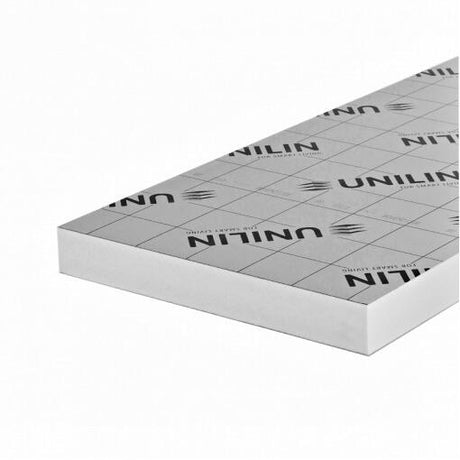
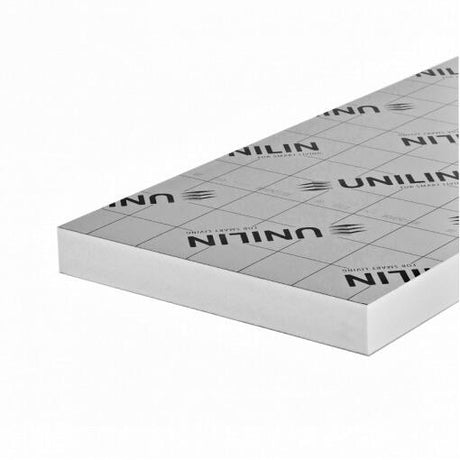
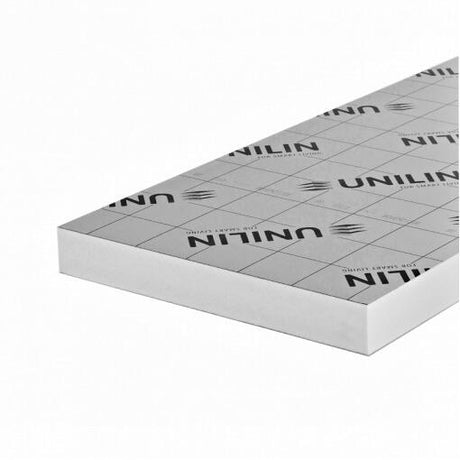
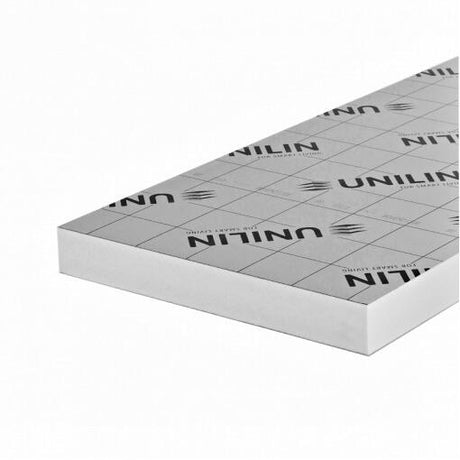
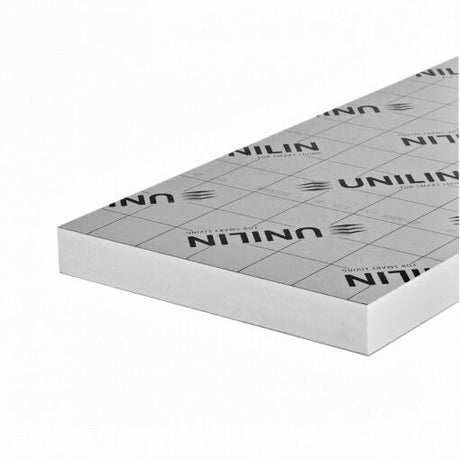
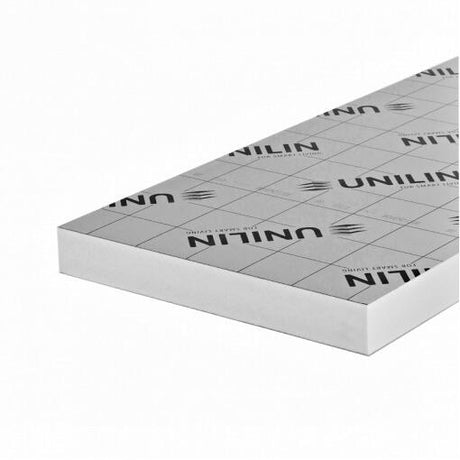
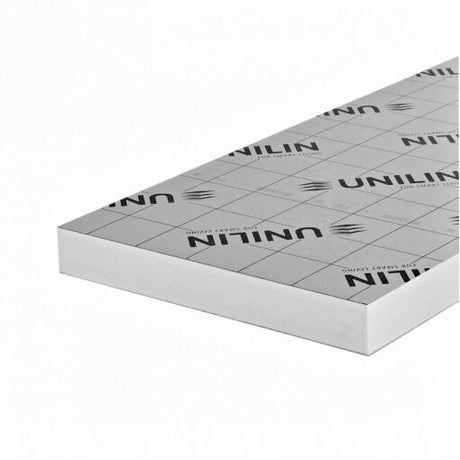
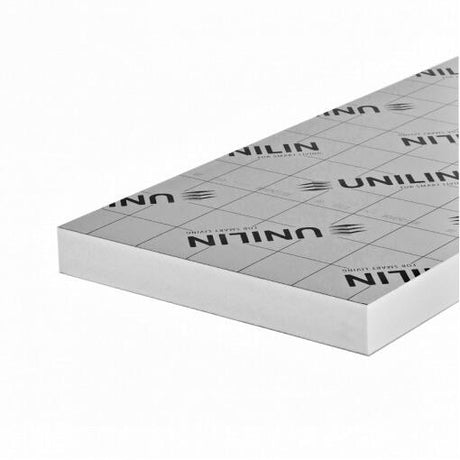
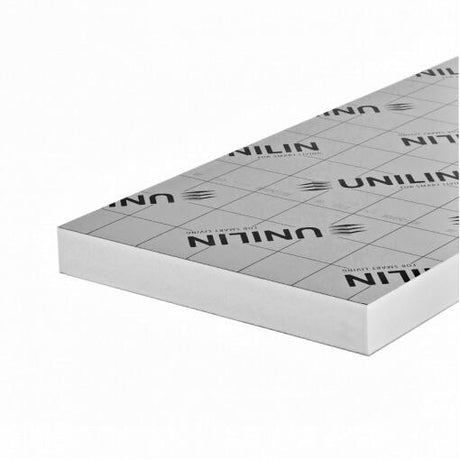
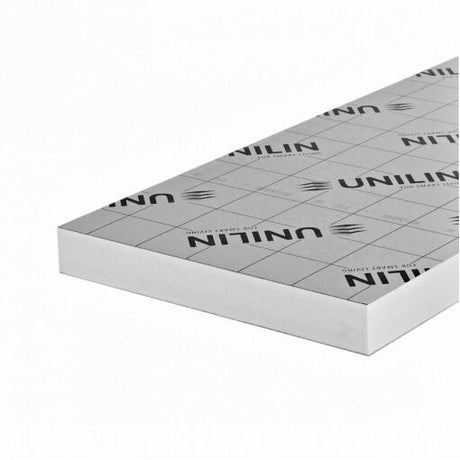
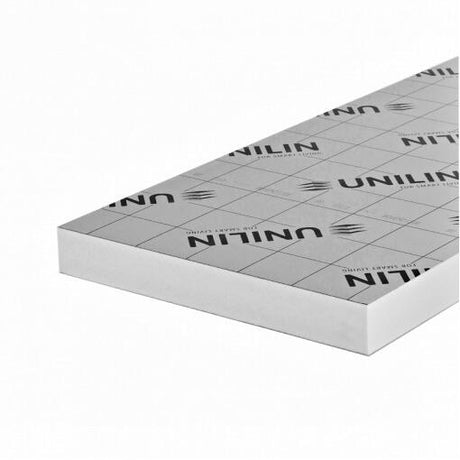
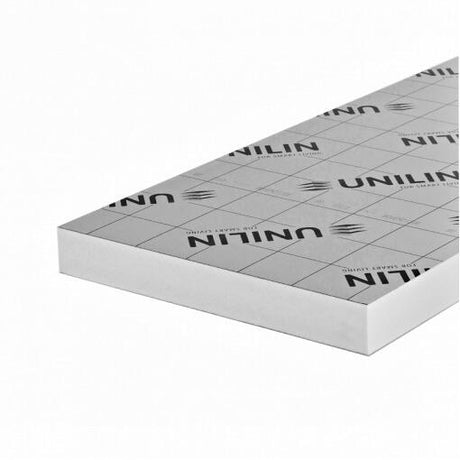
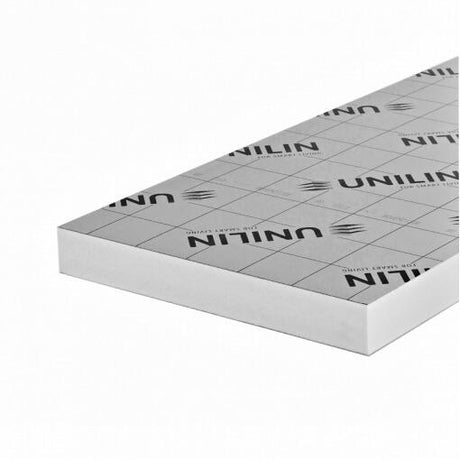
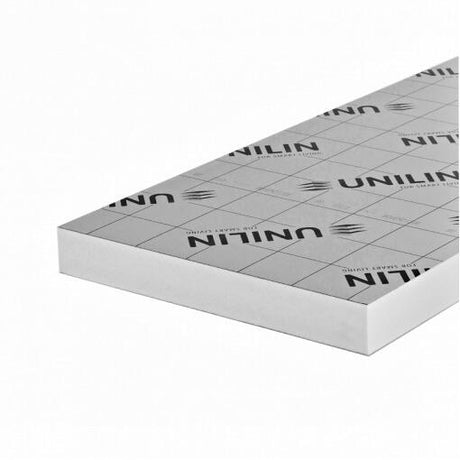
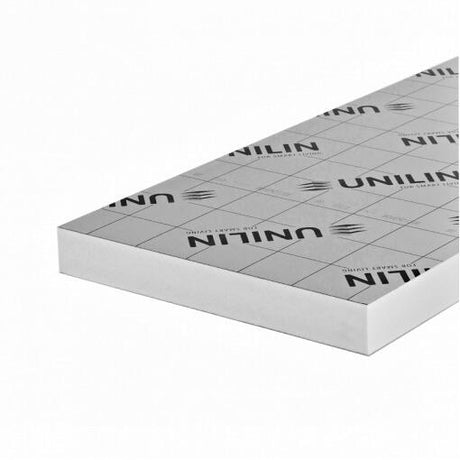
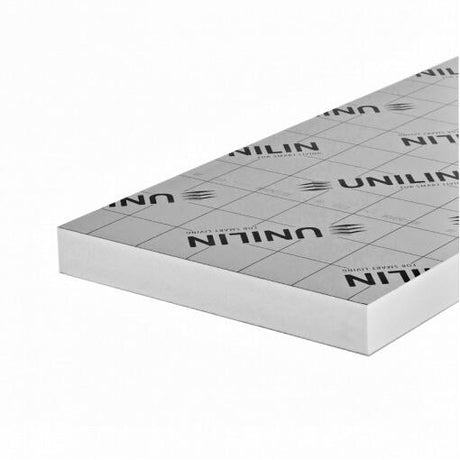
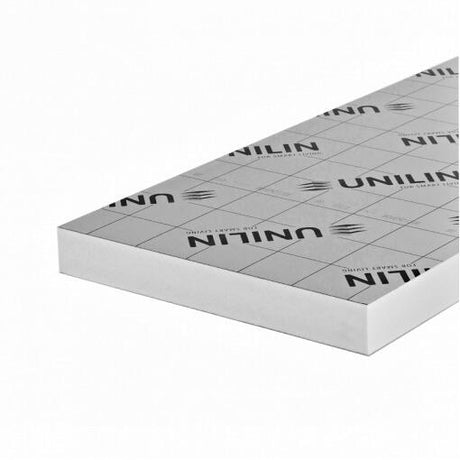
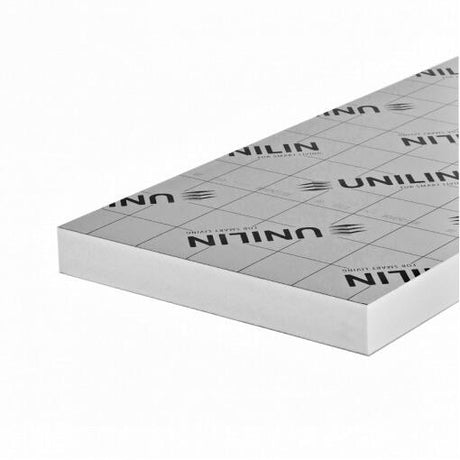
Unilin Thin-R XT/PR_UF is a rigid polyisocyanurate (PIR) insulation board with a low-emissivity foil facing bonded to both sides, supplied on a 2400mm x 1200mm board. It is certified for floors and pitched roofs and sold through the trade as a general-purpose board that also handles solid wall upgrades, timber and steel frame infill and ceilings. If you have specified Xtratherm before, this is the same board under its current name.
Two things earn it a place on a specification rather than the board next to it on the rack. The first is that single lambda value held from 25mm all the way to 150mm on one BBA certificate, which means one product and one piece of paperwork across a job that mixes thin drylining upgrades with deep floor build-ups. The second is currency: the certificate was reissued in 2026 and references the standards actually in force. Neither is glamorous. Both save time when Building Control asks.
Insulation UK stocks the full range, eighteen thicknesses from 15mm to 150mm. Here is how they compare, where each band earns its place, and the certification and regulatory detail that matters on site.
The range at a glance
Every board in the range is 2400mm x 1200mm with a CS(10\Y) 140 kPa compressive strength, so the only variables are depth, thermal resistance and what the thickness is realistically for. Note the lambda column: it holds at 0.022 W/mK from 25mm through to 150mm, which is the single most useful thing about this range and the reason a specification can stay on one product across very different build-ups.
| Thickness | Thermal resistance | Declared lambda | Typical application |
|---|---|---|---|
| 15mm | See datasheet | See datasheet | Reveals, boxing out, thinnest upgrades |
| 20mm | See datasheet | See datasheet | Thin drylining upgrades, topping up |
| 25mm | 1.10 m²K/W | 0.022 W/mK | Thin upgrades, reveals, ceilings |
| 30mm | 1.35 m²K/W | 0.022 W/mK | Drylining upgrades, topping up existing |
| 40mm | 1.80 m²K/W | 0.022 W/mK | Between rafters, frame infill |
| 50mm | 2.25 m²K/W | 0.022 W/mK | Between rafters, frame infill, floors |
| 60mm | 2.70 m²K/W | 0.022 W/mK | Between and over rafters, floors |
| 70mm | 3.15 m²K/W | 0.022 W/mK | Over rafters, floors, wall linings |
| 75mm | 3.40 m²K/W | 0.022 W/mK | Over rafters, floors, wall linings |
| 80mm | 3.60 m²K/W | 0.022 W/mK | Single-layer floors and roofs |
| 90mm | 4.05 m²K/W | 0.022 W/mK | Single-layer floors and roofs |
| 100mm | 4.50 m²K/W | 0.022 W/mK | Single-layer floors and roofs |
| 110mm | 5.00 m²K/W | 0.022 W/mK | Deep floors, tighter roof targets |
| 120mm | 5.45 m²K/W | 0.022 W/mK | Deep floors, Future Homes floor targets |
| 125mm | 5.65 m²K/W | 0.022 W/mK | Deep floors, Future Homes floor targets |
| 130mm | 5.90 m²K/W | 0.022 W/mK | Deep floors, Future Homes floor targets |
| 140mm | 6.35 m²K/W | 0.022 W/mK | Deep floors, Future Homes floor targets |
| 150mm | 6.80 m²K/W | 0.022 W/mK | Deepest single-layer floor build-ups |
All boards are 2400mm x 1200mm square edge, 2.88m² per board, with a low-emissivity foil facing to both faces. A 1200mm x 1200mm 15mm half board is also stocked for small upgrade work. The 15mm and 20mm boards sit below the board's certified thickness range, so confirm their declared thermal figures against a thickness-specific datasheet before specifying. Figures are taken from the Unilin Declaration of Performance and BBA Agrement Certificate 23/6997.
Which thickness should you choose?
Eighteen options can be paralysing, so it helps to think in bands. Your specification and your available build depth decide the answer, but this is roughly how the range breaks down in practice.
15mm to 30mm: space-tight upgrades and topping up
Thermal resistance up to 1.35 m²K/W at 30mm. This is the band for work where depth is the binding constraint rather than the target: topping up existing insulation, internal drylining upgrades to solid walls, boxing out around openings, and reveals where a thicker board would foul the frame. The 15mm and 20mm boards sit below the certified range, so treat their thermal figures as needing confirmation. 25mm is the thinnest board carrying the certified 0.022 W/mK, at 1.10 m²K/W, and 30mm gives you 1.35.
40mm to 75mm: the workhorse band
R-values of 1.80 to 3.40 m²K/W. This is the volume end of the range and covers most of what the board is actually sold for: pitched roofs between and over rafters, timber and steel frame infill, ceilings and general floor and wall duties. 40mm and 50mm tend to suit between-rafter work where the rafter depth is fixed, while 60mm, 70mm and 75mm are common over-rafter and general board thicknesses. If you are not sure where to start, start here and let the calculation push you up or down.
80mm to 100mm: single-layer floors and roofs
R-values of 3.60 to 4.50 m²K/W. This is where a floor or roof build-up hits a decent target in one board rather than doubling up, which means one set of joints to stagger and one layer to tape. 100mm at 4.50 m²K/W is the reference point most specifications land near, with 80mm and 90mm covering the steps below it.
110mm to 150mm: deep floors and tighter targets
R-values of 5.00 to 6.80 m²K/W. Deep floor build-ups, and the thicknesses that come into play as floor U-value targets tighten. 110mm, 120mm, 125mm, 130mm, 140mm and 150mm give you six steps to land a calculated figure exactly rather than rounding up and losing floor-to-ceiling height. 150mm declares 6.80 m²K/W, the highest single-layer resistance in the range. Check your slab or joist depth before committing, because this band needs the build-up to accommodate it.
All eighteen thicknesses are in stock and priced online, with free UK delivery on orders over £500 ex VAT.
Shop the rangeWhy Unilin Thin-R stands out
There is nothing exotic about 0.022 W/mK. It is the standard figure for general-purpose PIR, and a 100mm Unilin board and a 100mm Sopratherm board at the same lambda give you the same R-value. So the case for Thin-R is not built on the thermal figure. It is built on three things that show up when you are writing a specification rather than reading a datasheet.
- One lambda across the range. Unilin declares 0.022 W/mK from 25mm right up to 150mm on a single certificate. Celotex, now Sopratherm, declares the same lambda on GA4000 only across 50mm to 100mm; below that you move to a separate product, TB4000. On a job that mixes thin drylining upgrades with deep floor build-ups, Thin-R is one line on the spec and one certificate to file, not two.
- Current paperwork. BBA certificate 23/6997 was reissued to Issue 2 in 2026 and references the current NHBC Standards and BS 5250:2021, the code actually in force for condensation control. A fair amount of competitor literature still quotes decade-old certificates. When the certification is current, so is the compliance case you are building on it.
- Detailed floor certification. The certificate is at its most specific on floors, covering ground-bearing concrete slabs, suspended concrete and beam-and-block, and between the joists of suspended timber ground floors, including suitability with underfloor heating and the NHBC minimum ground-supported slab requirement. If floors are the job, that specificity is worth more than a broad "five-in-one" claim.
Thermal performance across the range
PIR is one of the most thermally efficient rigid insulants in common use, which is why it is the default where build depth is tight. Because lambda is fixed at 0.022 W/mK across the certified range, thermal resistance scales predictably: 50mm gives 2.25 m²K/W, 100mm gives 4.50 m²K/W, 150mm gives 6.80 m²K/W. That makes the range easy to specify, because if the calculation asks for 5.65 m²K/W the 125mm board gives it to you exactly, with nothing to interpolate and nothing to caveat.
R-value is a board property and belongs to the board. U-value is not: it is a property of the whole build-up, and depends on the other layers, the construction and any bridging from joists, studs or fixings. Two floors using the same 100mm board can land on noticeably different U-values. Choose the thickness against the R-value the specification calls for, and let the U-value calculation for the full element sit where it belongs, with the designer.
Euroclass F: what combustible actually means
Unilin Thin-R is classified Euroclass F to BS EN 13501-1. That is the honest reaction-to-fire class for foil-faced PIR, and it should be stated as it is rather than dressed up. You will occasionally see older British Standard language such as "Class 1 surface spread of flame" to BS 476-7 offered as a fire credential on competitor sheets. That route is legacy, and the current measure is the Euroclass classification.
In practice this means three things. The board contributes to a compliant fire outcome once it is enclosed behind plasterboard, screed or another lining, as part of a tested system. It does not carry a fire-resistance period on its own, and none should be inferred from the board alone. And where the fire strategy calls for non-combustible materials, typically on taller buildings, PIR is not the compliant route and a Euroclass A1 or A2 product should be specified instead.
Worth being precise about scope: as a floor and pitched-roof board, external wall use above the height thresholds was never Thin-R's job in the first place. This is a limit of the material, not a fault of this product.
Moisture and condensation
The closed-cell PIR core and the foil facings give the board good resistance to moisture movement, but the foil should be understood for what it is: a low-emissivity thermal facing, not a vapour control layer in its own right. Whether a separate VCL is needed, and where it sits in the build-up, is governed by a condensation risk assessment to BS 5250:2021 for the specific construction. Treat that assessment as the decision-maker rather than assuming the facing removes the need for a vapour layer.
Compressive strength and floor loading
Thin-R declares a compressive strength of CS(10\Y) 140 kPa. That suits domestic and light-commercial floor loading: screeds, floor finishes, furniture and normal foot traffic all sit comfortably within it. It is not a heavy-duty floor board and it should not be presented as one. Where the loading is heavier, for example plant rooms or vehicle access, an enhanced-strength grade is the correct specification.
Applications, and where a different grade is correct
Thin-R is sold as a general-purpose board, and its certification backs specific uses. Two of the jobs it gets bought for have their own purpose-made grades, which is worth knowing before the delivery arrives.
- Floors. The certified core, and the most detailed part of the certificate: ground-bearing concrete slabs, suspended concrete and beam-and-block floors, and between the joists of suspended timber ground floors. Suitable for use with underfloor heating.
- Pitched roofs. Between and over rafters, with the roof variant carrying its own certification.
- Walls and ceilings. Internal drylining upgrades to solid walls, timber and steel frame infill, and general board use.
- Masonry cavities need XT/CW. The engineered tongue-and-groove cavity grade is the correct specification for partial fill cavity work, not this board. Different product, different edge detail.
- Direct drylining needs XT/TL. Where the board is being fixed straight to a solid wall and skimmed, an insulated plasterboard is the dedicated product and does the job in one fix rather than two.
In short, floors and pitched roofs are the certified core. The wider general uses are legitimate, but do not use Thin-R where a cavity board or an insulated plasterboard is what the detail actually calls for.
Installation
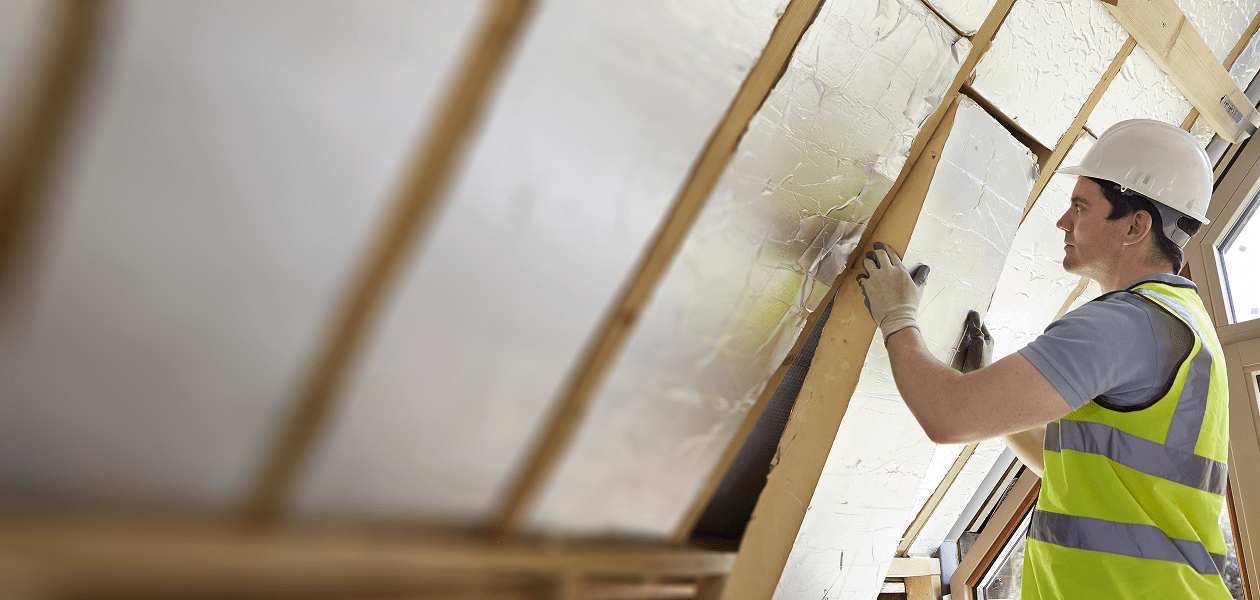
Nothing about installing Thin-R is unusual, and it is a forgiving board to work with. A few things apply almost universally.
- Cut it clean. A sharp knife or a fine-toothed saw both work. Take the time to get cuts square, because a sloppy edge is a gap you then have to fill.
- Butt tight and stagger the joints. Boards are laid closely butted with joints staggered between rows. Where a gap is unavoidable, fill it with expanding foam or a cut strip of board rather than leaving it open. An open joint is a thermal bridge you cannot see once the floor or lining goes on.
- Fill the depth, do not force it. Between joists or rafters, cut to a friction fit rather than compressing a thicker board into a shallower space. A 100mm board squeezed into an 80mm gap does not perform like either.
- Follow the current instructions. Install in line with the manufacturer's current guidance and the project specification, particularly where the board forms part of a certified floor or roof build-up.
Keep the boards dry and out of prolonged sunlight before they are covered. PIR is not a weather-exposed product: extended UV exposure degrades the facing, and a wet board laid into a floor build-up is a problem you will not be able to reach later. Store flat, off the ground and under cover, and lay only what you can cover the same day.
Certification and standards
Unilin Thin-R XT/PR_UF is CE marked to BS EN 13165, the harmonised standard for factory-made rigid polyurethane foam products.
- Declared thermal conductivity: 0.022 W/mK, flat across 25mm to 150mm
- Reaction to fire: Euroclass F to BS EN 13501-1
- Compressive strength: CS(10\Y) 140 kPa
- BBA Agrement Certificate 23/6997, Issue 2, covering floors and pitched roofs and confirming suitability against the relevant NHBC Standards chapters for floors, including the NHBC minimum ground-supported slab requirement
- Condensation control referenced to BS 5250:2021, the current code
- Manufactured under certified quality, environmental and health and safety management systems (ISO 9001, ISO 14001 and ISO 45001)
Always work from the latest Unilin datasheet, Declaration of Performance and BBA certificate before specification, purchase or installation. Contact us for the current documentation.
What floor U-value are you actually aiming at?
The reason the thicker boards are worth planning around is regulatory rather than technical. The final Approved Documents for the Future Homes Standard were published in March 2026 and come into force in March 2027, with a transitional period running into 2028. One change bites directly on floors: the notional floor U-value tightens from 0.13 W/m²K under Part L 2021 to 0.11 W/m²K under the new standard.
Hitting the tighter target in a ground-bearing or beam-and-block floor typically pushes PIR depths into the 120mm to 150mm bracket. If you are pricing floor build-ups for work that will land after the transition, the 120, 125, 130, 140 and 150mm boards are the ones to have in front of you rather than the depths that satisfied the old figures. Confirm the current position with your energy assessor or Building Control, since the Approved Documents are periodically amended.
How Unilin sits alongside the other PIR boards
For context, here is the mainstream general-purpose PIR field at a glance. The core numbers are close by design; this is a commodity market where the boards are largely interchangeable at matched thickness.
| Board | Lambda (W/mK) | Reaction to fire | Note |
|---|---|---|---|
| Unilin Thin-R XT/PR_UF | 0.022 (25 to 150mm) | Euroclass F | Flat lambda down to 25mm on one certificate |
| Celotex / Sopratherm GA4000 | 0.022 (50 to 100mm) | Euroclass F | Thinner boards are a separate product (TB4000) |
| EcoTherm Eco-Versal | 0.022 (20 to 150mm) | Euroclass F | General-purpose "five-in-one" board |
| Kingspan TP10 / TR27 | 0.022 | Euroclass F | Application-specific board names |
| Recticel Eurothane GP | 0.022 | Euroclass F | General-purpose board |
| Mannok Therm | 0.022 | Euroclass F | Formerly Quinn |
Compressive strengths across these boards cluster around the floor-grade mark but vary by grade, so check the specific board and thickness rather than assuming a single figure across a brand. Browse the wider PIR insulation range if you want to compare stock and pricing directly.
Any drawbacks?
A few, and they are all worth knowing before the delivery arrives.
- It is combustible. PIR is Euroclass F. On buildings where the fire strategy requires non-combustible insulation, this is not the board, and a Euroclass A1 or A2 product is the correct specification.
- At matched thickness it is not thermally better than its rivals. The mainstream general-purpose PIR boards share essentially the same core performance at a given thickness. Unilin's edge is the flat lambda across a wider certified range and the currency of its certification, not a lower U-value at 100mm.
- It is not a heavy-duty floor board. 140 kPa covers domestic and light-commercial loading. Plant rooms, vehicle access and similar need an enhanced grade.
- The thinnest two boards sit outside the certified range. 15mm and 20mm are stocked and useful, but their declared thermal figures need confirming against a thickness-specific source rather than being read off the 0.022 W/mK headline.
- Two jobs need a different grade. Masonry cavity work wants XT/CW and direct drylining wants XT/TL. Using Thin-R for either is a specification error rather than a shortcut.
Our expert verdict
Unilin Thin-R is a well-certified, general-purpose PIR board that does the ordinary things well and comes with two quiet advantages: one lambda value across a wide certified range, and paperwork that is genuinely up to date. It will not out-insulate its rivals millimetre for millimetre, and it is not pretending to.
Be realistic about two things. Euroclass F is the material's ceiling, so if the fire strategy needs non-combustible then this conversation ends there. And the R-value on the board is not the U-value on the certificate, so get the element calculated properly and treat the board figure as an input.
Specified with those caveats understood, it earns its keep on jobs that want a single, current, floor-and-roof-certified board across a spread of thicknesses without hopping between products to do it. For domestic floors, pitched roofs and general upgrade work, especially where you are already planning around the tighter floor targets coming in, it is a sound and straightforward choice.
All eighteen thicknesses of Unilin Thin-R PIR, 15mm to 150mm, are in stock at Insulation UK with trade pricing online and free UK delivery on orders over £500 ex VAT. Bulk and pallet quantities go out on our own vehicles.
Not sure which thickness your floor, roof or wall build-up needs? Our team knows the Unilin range inside out and has over 50 years of insulation experience behind it. Call 03003 034 578 and we will talk it through.
Shop Unilin PIR insulation