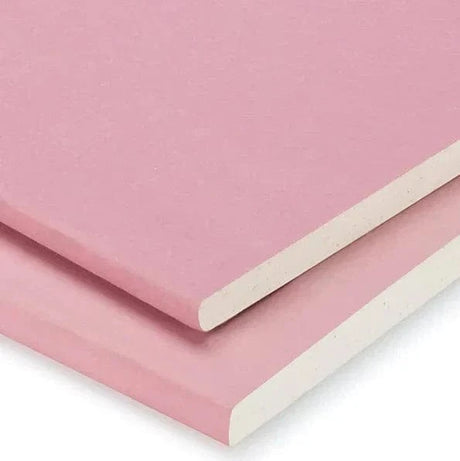
When a wall or ceiling has to do more than divide a space, when it has to hold back fire, standard plasterboard is not enough on its own. Fire-resistant plasterboard is the board built for that job: a plasterboard with a reinforced core that helps a construction resist fire for longer, used in fire-rated partitions, separating walls, protected escape routes and ceilings across homes and commercial buildings.
It is a Type F board to BS EN 520. Like standard board it has a non-combustible gypsum core, but that core is reinforced with glass fibre and additives so it holds together further into a fire, which is what lets a tested wall or ceiling reach a fire-resistance rating. It is fixed to timber or metal framing, or bonded to masonry, then taped and jointed or skimmed like any other board.
Insulation UK stocks the fire range in 12.5mm and 15mm tapered edge boards in the full 2.4m x 1.2m sheet, plus a smaller 12.5mm 6x3 board (1.8m x 0.9m) for tighter access and repairs. The thickness, edge and size you choose follow the fire-rated system you are building and how the board will be finished.
The fire-resistant plasterboard range at a glance
Every board shares the same reinforced Type F gypsum core. What changes is the thickness, the sheet size, the coverage per board, and the edge profile that decides how the boards are finished. The range comes in two edge profiles: tapered edge for a taped and jointed finish, and a smaller square edge board for skimming.
Tapered edge
| Thickness | Sheet size | Coverage per board | Best fit |
|---|---|---|---|
| 12.5mm | 2.4m x 1.2m | 2.88m² | The standard fire board for most fire-rated walls and ceilings. |
| 15mm | 2.4m x 1.2m | 2.88m² | The heavier board for higher fire-resistance build-ups and where 15mm is specified. |
Square edge
| Thickness | Sheet size | Coverage per board | Best fit |
|---|---|---|---|
| 12.5mm | 1.8m x 0.9m (6x3) | 1.62m² | A smaller, easier-to-handle board for tight access, patching and repairs to fire-rated linings. |
*Coverage is per board. The 2.4m x 1.2m boards weigh 30kg (12.5mm) and 35kg (15mm): fire board is denser than standard board of the same size. Fire resistance is a property of the whole tested construction, not the board alone, so always confirm the reaction-to-fire class and any fire-resistance rating on the product datasheet, Declaration of Performance and project specification before ordering.
What makes fire-resistant plasterboard different
Standard plasterboard already has a non-combustible gypsum core, so the difference is not that fire board resists burning and standard board does not: both cores do. What sets a fire-resistant board apart is what the core does once it gets hot. Fire-resistant plasterboard is a Type F board to BS EN 520, with a gypsum core reinforced with glass fibre and other additives.
That reinforcement holds the core together for longer as it is heated, so the board stays in place and keeps protecting what is behind it further into a fire, rather than breaking up early. In a wall or ceiling that has to hold back fire for a set period, that extra core cohesion is what allows the construction to reach a higher fire-resistance rating.
Reaction to fire and fire resistance: the honest distinction
Two different things get called fire performance, and it is worth separating them, because they are not interchangeable.
Reaction to fire describes how a material itself behaves when exposed to fire: whether it ignites, spreads flame or gives off smoke. Gypsum plasterboard, standard and fire-resistant alike, is classified for this under BS EN 13501-1 and generally sits at A2-s1,d0, meaning very limited contribution to a fire.
Fire resistance is a different measure. It is the ability of a complete construction, a wall, ceiling or floor, to hold back fire for a stated time, measured in minutes against criteria for load-bearing capacity, integrity and insulation. A 30, 60 or longer minute rating belongs to a specific tested system: the board type and number of layers, the frame, the fixings, the joint treatment and any cavity insulation, all together. Fire-resistant plasterboard is a key part of achieving those ratings, but the board on its own does not carry a rating. Build to a tested specification and confirm the period the system is designed to achieve, rather than reading a rating off the board.
Board thickness and what it changes
Both stocked thicknesses share the same reinforced core; the difference is depth, weight and how they are used in a fire-rated build-up. 12.5mm is the standard fire board, the thickness most fire-rated partitions and ceilings are lined with, and the 2.4m x 1.2m board weighs 30kg. 15mm adds more mass and a thicker core, at 35kg for the 2.4m x 1.2m board, and is used where a higher fire-resistance period is specified, in service risers and structural protection, or where the system calls for a 15mm board.
Higher ratings are often reached by using two layers of board rather than one thicker board, so follow the tested system rather than assuming a thicker board is a like-for-like upgrade. Thickness and layering are set by the fire-rated specification, not chosen freely.
Fixing and site practicality
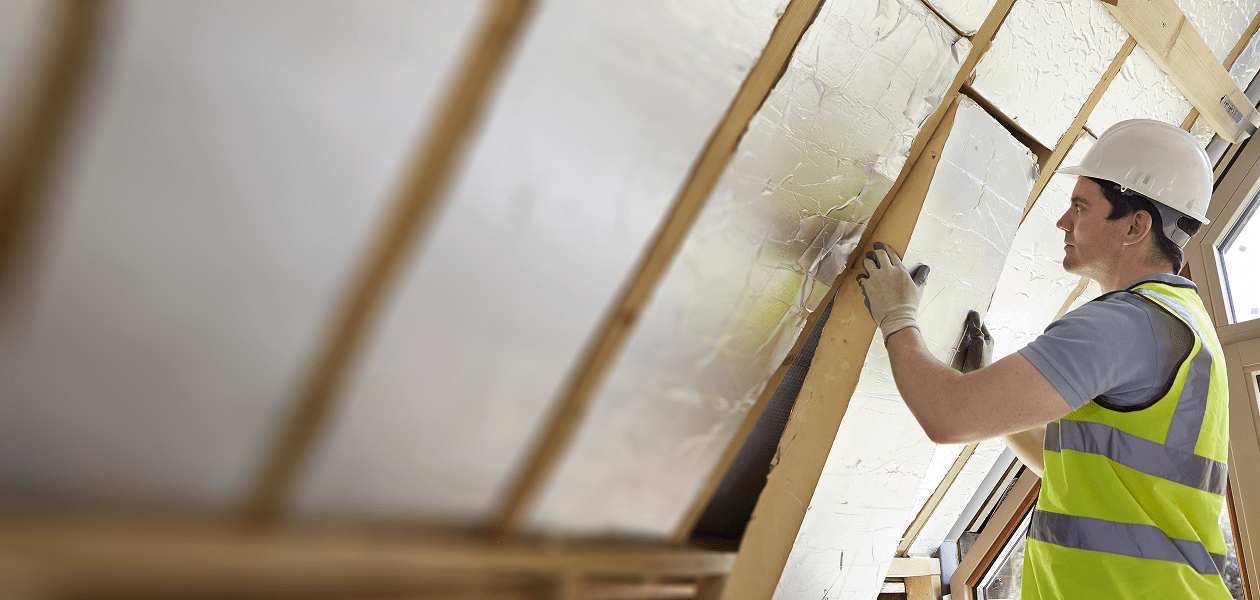
Fire-resistant board is worked much like standard board: scored with a sharp knife along a straightedge, snapped and cut through, then screwed to timber or metal framing and taped and jointed or skimmed. The core is denser, so it is a firmer cut and the boards are noticeably heavier. A 15mm 2.4m x 1.2m board at 35kg is a genuine two-person lift, particularly overhead.
Where fire performance depends on the detail, the detail matters more than usual. Fix at the screw centres the system specifies, treat the joints as the specification requires, and seal around the perimeter and any service penetrations, because gaps and poorly formed joints undermine the fire resistance of the finished construction. Store the boards flat, dry and off the ground before installation.
Standards and sustainability
Fire-resistant plasterboard is a Type F board manufactured to BS EN 520, the harmonised European standard for gypsum plasterboards, and is CE or UKCA marked against it. Its reaction-to-fire class is determined under BS EN 13501-1. As an own-brand line, the definitive figures for any given board, including its reaction-to-fire class and the systems it is tested in, live on that board's datasheet and Declaration of Performance, so confirm those against your project's fire strategy before specifying.
Gypsum remains one of the more recyclable construction materials, and clean plasterboard offcuts can be recycled through dedicated waste streams rather than sent to landfill.
Which board should you choose?
12.5mm tapered edge: the standard fire board
12.5mm is the thickness most fire-rated walls and ceilings are lined with. Its tapered edge suits a taped and jointed finish, and at 30kg for the full sheet it is the everyday choice for fire-rated partitions, separating walls and protected ceilings. Stocked as a 12.5mm tapered edge 2.4m x 1.2m board.
15mm tapered edge: the heavier board
15mm carries more mass and a thicker reinforced core, for build-ups aiming at a higher fire-resistance period, for service risers and structural protection, or where a 15mm board is specified. At 35kg for the full sheet it is a firmer lift, and it is often used in multi-layer systems. Stocked as a 15mm tapered edge 2.4m x 1.2m board.
12.5mm 6x3 square edge: the handy board
The 6x3 board is a smaller 1.8m x 0.9m sheet, easier to handle single-handed and to get into tight spaces. It suits patching and repairs to fire-rated linings, smaller rooms, cupboards and access-restricted work. It is a square edge board, finished by skimming rather than taped jointing. Stocked as a 12.5mm 6x3 board.
Tapered edge or square edge?
This range comes in both edge profiles, and the choice is about how the board is finished. Tapered edge boards, the 12.5mm and 15mm 2.4m x 1.2m sheets, have a slight recess along the long edges that is filled with tape and jointing compound so the joint sits flush with the board face, ready to decorate. That is the tape-and-joint method, and it suits work decorated straight onto the board.
The smaller 6x3 board is a square edge board, with a straight, flat edge that butts up to form a simple joint. Square edge is finished by skimming over the whole surface, which covers the joints, and it is the practical choice for patching, repairs and tight access. Choose tapered where you are taping and jointing a fire-rated lining, and the square edge 6x3 where you are skimming or working in a confined space.
Any drawbacks?
Fire-resistant board covers fire, not everything. It is not a moisture-resistant board for wet rooms, an acoustic board for demanding sound insulation, or an insulated board for thermal upgrades. For those, a moisture-resistant, acoustic or insulated board is the right tool, sometimes alongside a fire board where more than one performance is needed.
It is also heavier than standard board and a firmer cut, so plan handling, especially for the 15mm and for overhead work. The most important limit to keep in mind is that the board delivers its fire performance as part of a tested system, not on its own: the rating comes from the whole construction, correctly built. For heavier-duty fire protection to steelwork or specialist board applications, fire protection boards may be the more appropriate product.
Our expert verdict
Fire-resistant plasterboard is the board to reach for wherever a wall or ceiling has to hold back fire: a Type F board with a reinforced gypsum core that stays intact longer in a fire and helps a construction reach its rated fire-resistance period.
Pick the board for the job: 12.5mm as the standard fire board for most fire-rated walls and ceilings, 15mm where a higher rating, service risers or structural protection call for more mass, and the smaller 6x3 board for patching, repairs and tight access. Build to a tested specification, treat the joints and perimeter properly, and confirm the rating on the system rather than the board.
For fire-rated partitions, separating walls, protected escape routes and ceilings, fire-resistant plasterboard belongs at the top of the list, with the standard, moisture-resistant and acoustic ranges there for the jobs that need them.
Shop the Fire Resistant Plasterboard range today, or speak to the Insulation UK team on 03003 034 578 if you need help choosing the right thickness or board for your fire-rated walls and ceilings.